There is a difference between a room that is beautifully decorated and one that feels as though it has been gathered slowly over time. The first can be perfectly pleasant: the pillows agree, the artwork fits the wall, and every surface has been thoughtfully considered. But the second has a different kind of pull. It feels particular. You want to sit down, notice the small things, and imagine the life that happens there when no one is looking.
That feeling is not about owning antiques, spending more, or refusing anything new. It is about the relationships between things: what is useful, what is remembered, what is allowed to be quiet, and what has a little history of its own. A collected room does not look unfinished. It looks like someone has lived with it long enough to know what deserves to stay.
A collected room has a point of view, not a formula
Decorated rooms often begin with a formula. Choose a palette, repeat it neatly, buy the corresponding pieces, then make sure every corner has been addressed. There is nothing wrong with order, but when every item performs the same idea at the same volume, the room can begin to feel more assembled than personal.
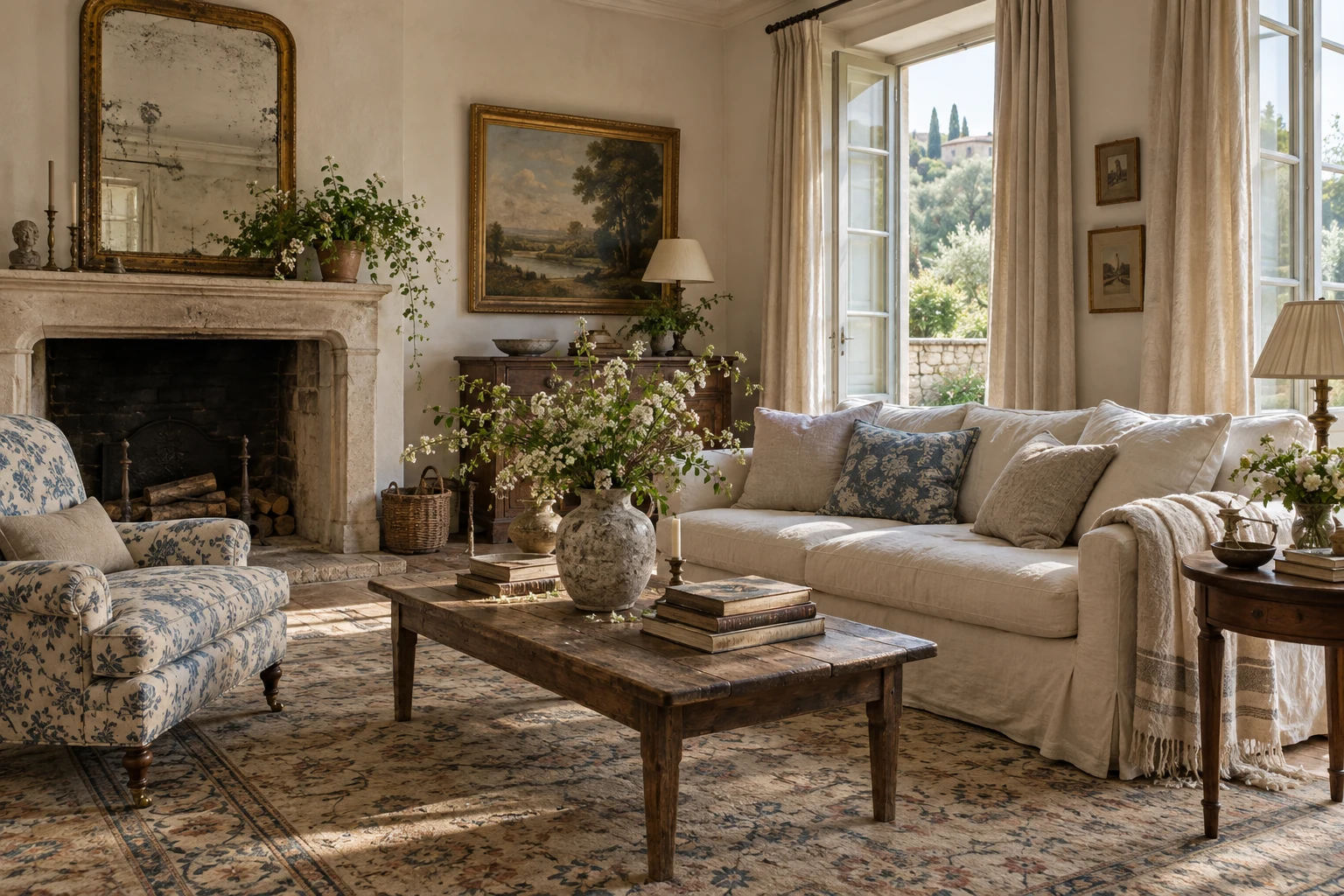
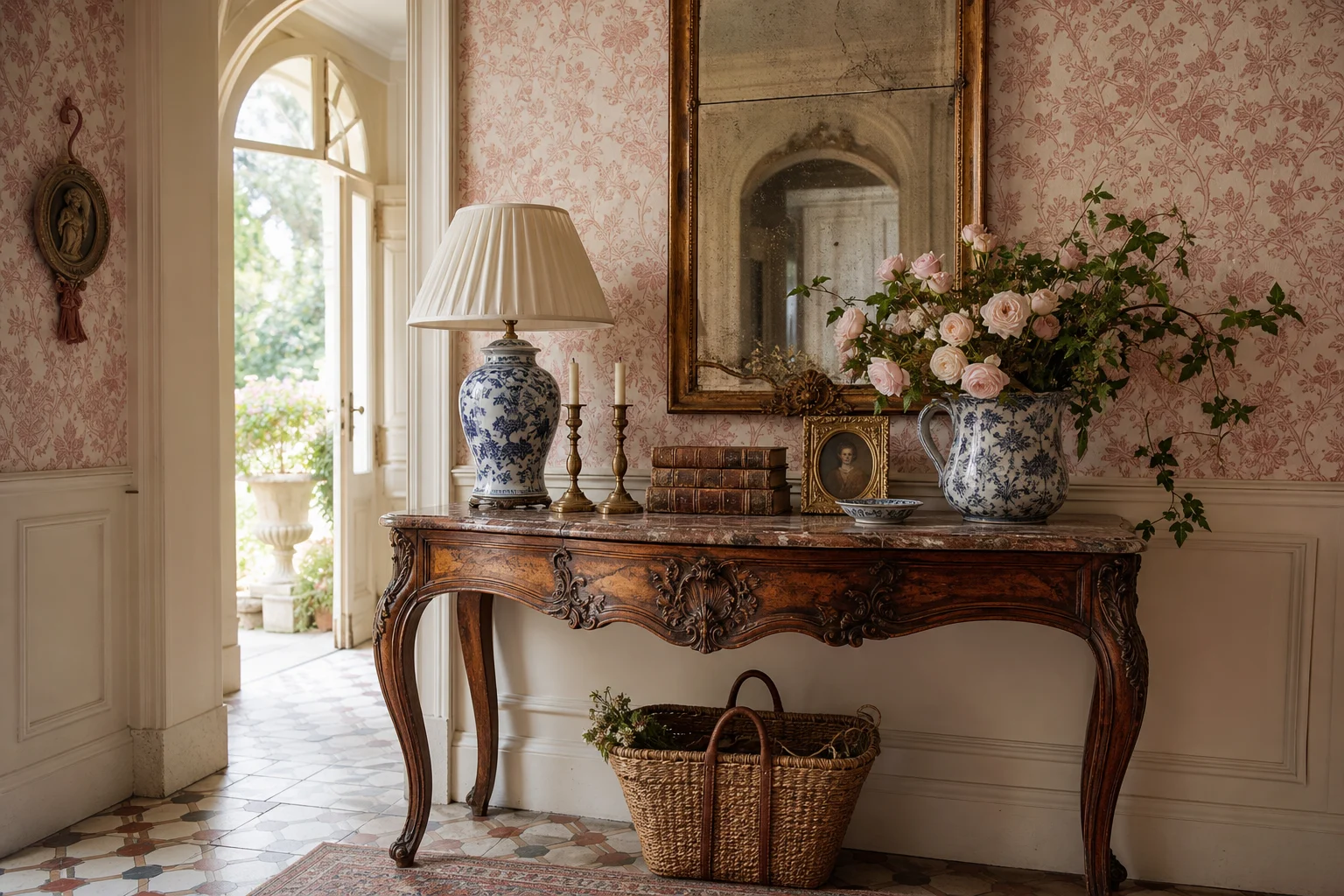
A collected room is still intentional, but its choices are related rather than identical. The wood may be warm in one place and painted in another. A faded floral might sit near a plain linen chair. An aged gilt frame can make sense beside a ceramic lamp because both bring softness and character, not because they are part of the same set. The through line is a point of view: a love of gentle colour, honest materials, familiar shapes, or objects with a little presence.
Useful things make the beauty believable
The quickest way to make a room feel overly arranged is to turn every surface into a display. A collected home leaves room for ordinary life. A bowl holds fruit. A lamp is close enough to read by. A stack of books has clearly been opened. A chair is placed where someone might actually sit, rather than where it photographs best.
Usefulness keeps a room from becoming too precious. It gives the prettiness a reason to be there. In European interiors, some of the loveliest details are often the most practical: a pitcher of branches, a woven basket beside a chair, a small table that catches a cup of tea, a textile that softens a room while inviting people to use it. Beauty feels more generous when it is part of the day rather than reserved for looking at.
Not every piece needs to be the moment
Collected rooms have rhythm. There is one chair with a lovely shape, one work of art that anchors a wall, one table with enough patina to catch your attention—and then there are quieter things around them. A plain linen curtain. A simple rug. A small lamp with an unfussy shade. These resting notes are what allow the more expressive pieces to feel special.
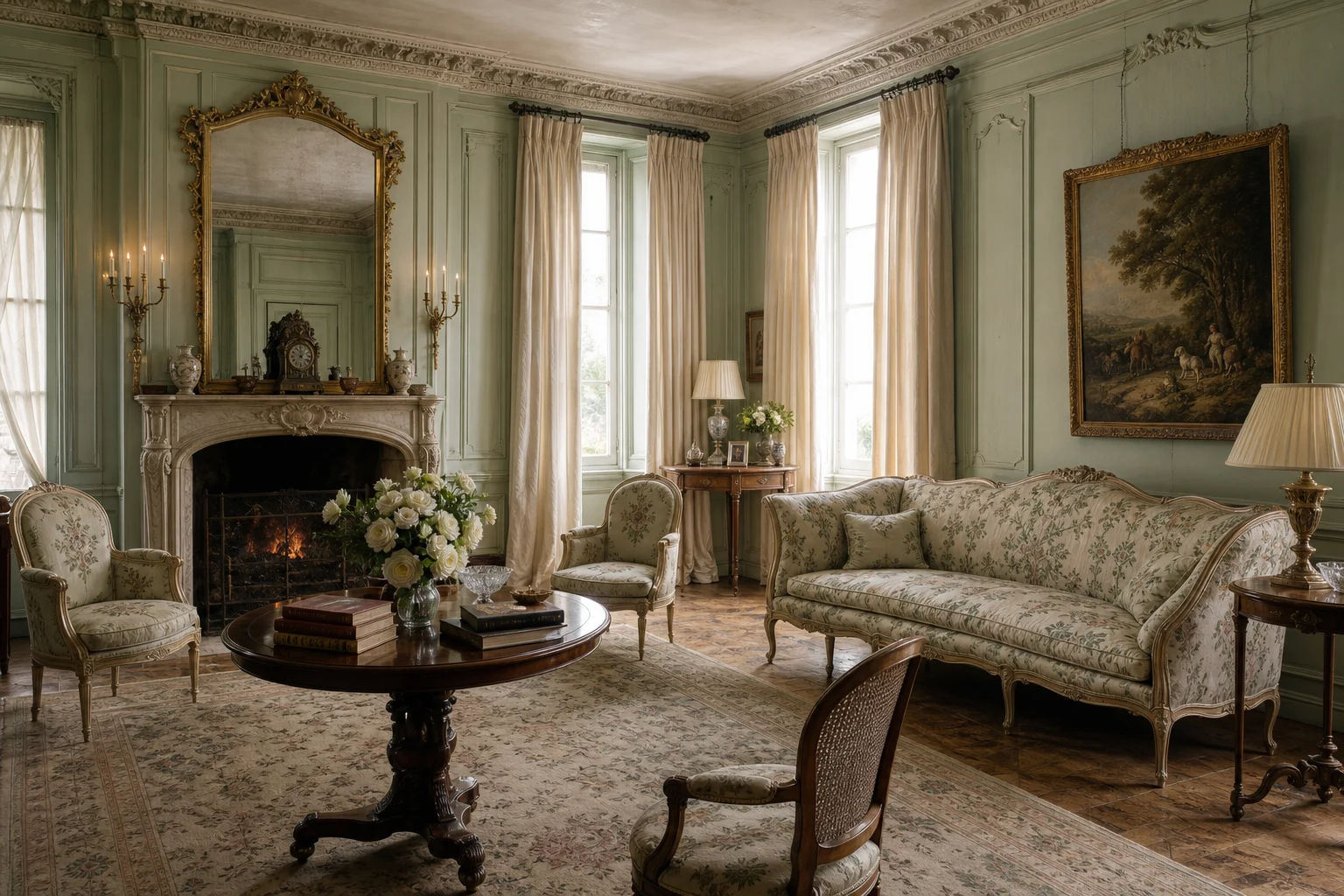
When every object is a statement, a room has nowhere to breathe. Try letting one thing lead and allowing the others to support it. On a mantel, that might mean a single painting with two low candlesticks rather than five unrelated objects. On a bed, it may mean one faded floral quilt with simpler pillows. The room will feel calmer, but also more confident.
A room becomes collected when the eye can move through it without being asked to admire every single thing.
New pieces need a place in the story
A room does not need to be filled with heirlooms to feel established. New pieces can belong beautifully when they contribute something that feels enduring: a softened finish, visible grain, a graceful silhouette, a fabric with a little texture, or a colour that looks as though it has faded gently with time.
The question is not whether something is old. It is whether it brings the room closer to its point of view. A new wood table may feel more at home than an antique that is too formal for the life around it. A fresh print can carry the same sense of memory as an older frame if its subject, scale, and colour are right. Look for pieces that add to the conversation instead of starting a new one.
Leave a little evidence of life
Perfect symmetry can be beautiful, but a perfectly frozen room rarely feels romantic for long. The most inviting interiors allow for a little movement: a chair angled toward the window, a book left on the ottoman, a sprig that has fallen from a vase, a folded throw that is not quite squared at the edge. These details should never be contrived. They are simply the signs that a room belongs to someone.
This does not mean clutter. It means choosing a version of order that is human. Clear the surface, then leave the one thing that feels useful or personal. Straighten the chairs, but do not make them all stand at attention. A collected room feels cared for, not controlled.
The final edit is usually subtraction
Often, the shift from decorated to collected happens in the edit. Remove the extra pillow that repeats a colour already present. Take one small object off the table so the beautiful bowl can breathe. Let a wall remain partly empty rather than adding art only to fill it. This restraint gives the things you keep more weight.
It also creates space for the room to grow. The most convincing homes are never entirely finished; they make room for a found frame, a useful stool, a gift from a friend, or the small object that eventually becomes the detail everyone remembers. A room gathered slowly will always feel more personal than one completed all at once.
Let the room become more itself over time
A collected interior is not a look to copy exactly. It is the result of noticing what you return to: the warm wood you prefer to painted white, the blue-and-white bowl you use every day, the chair that makes a corner feel inhabited, the artwork that holds the room together. Begin with those things, edit with care, and trust that a little time will do some of the work for you.
For a broader guide to the materials and details behind this approach, read The European Home: A Guide to a Collected, Timeless Interior. You can also explore the French Country, French Coastal, and Cottagecore edits for three different expressions of the same idea.