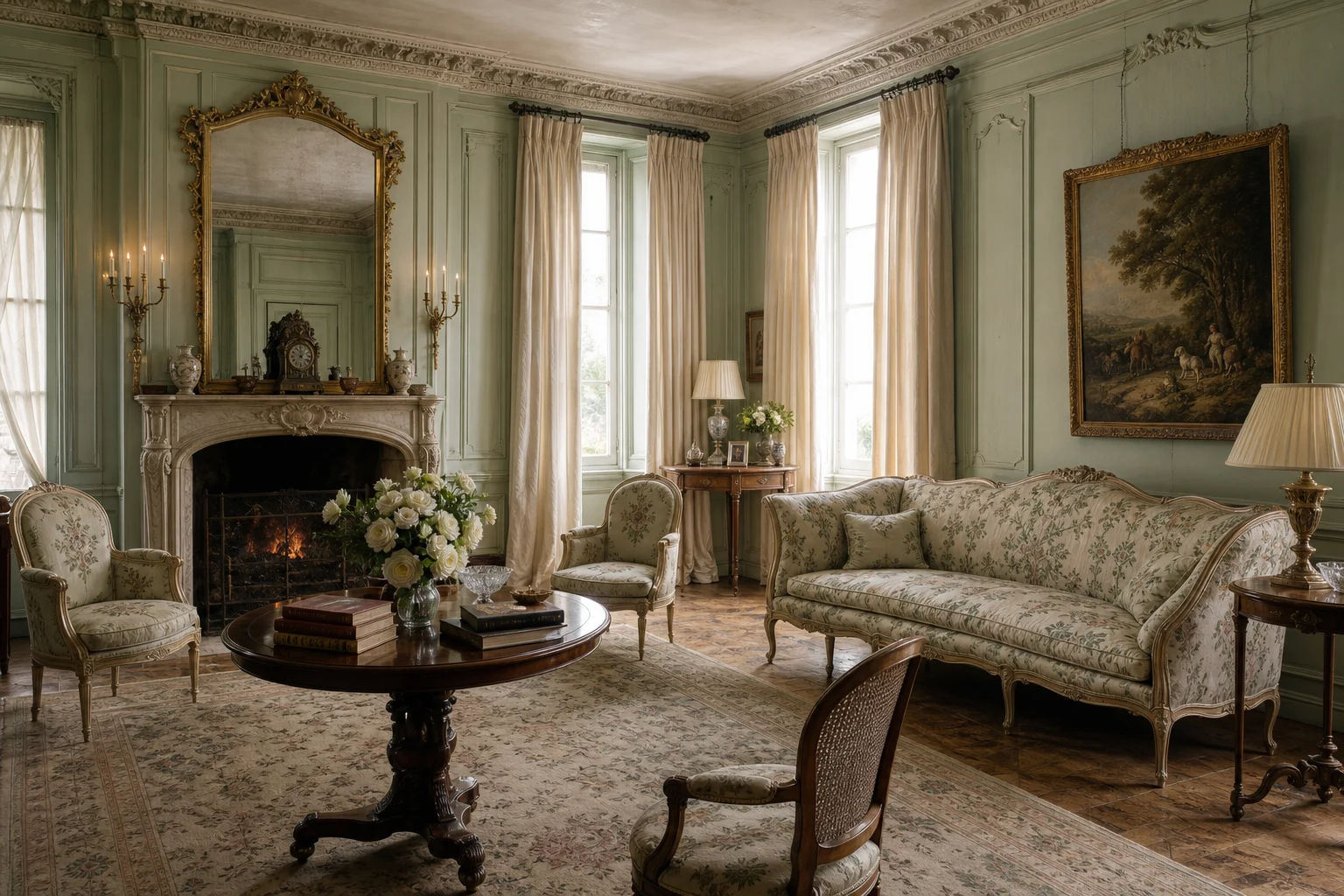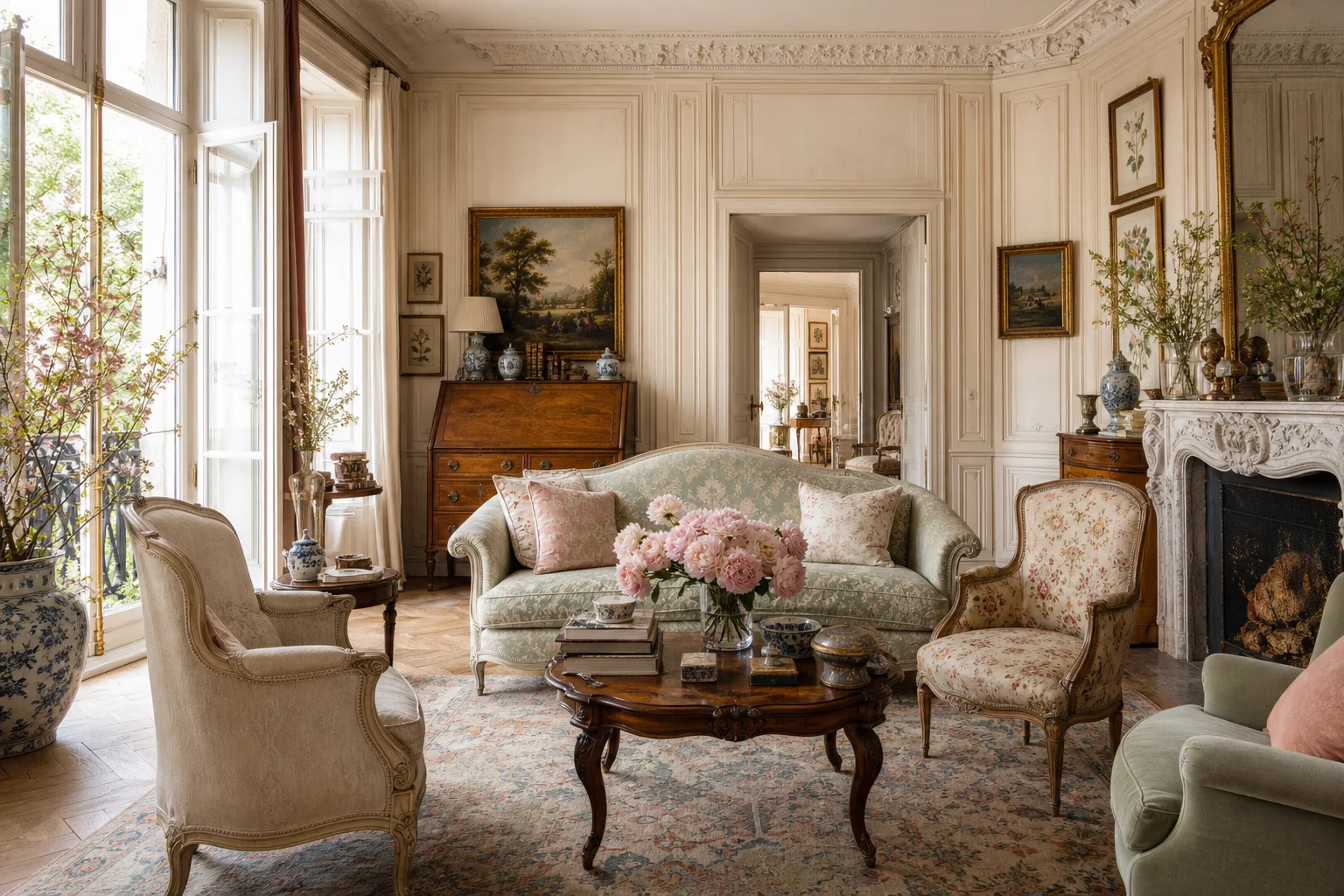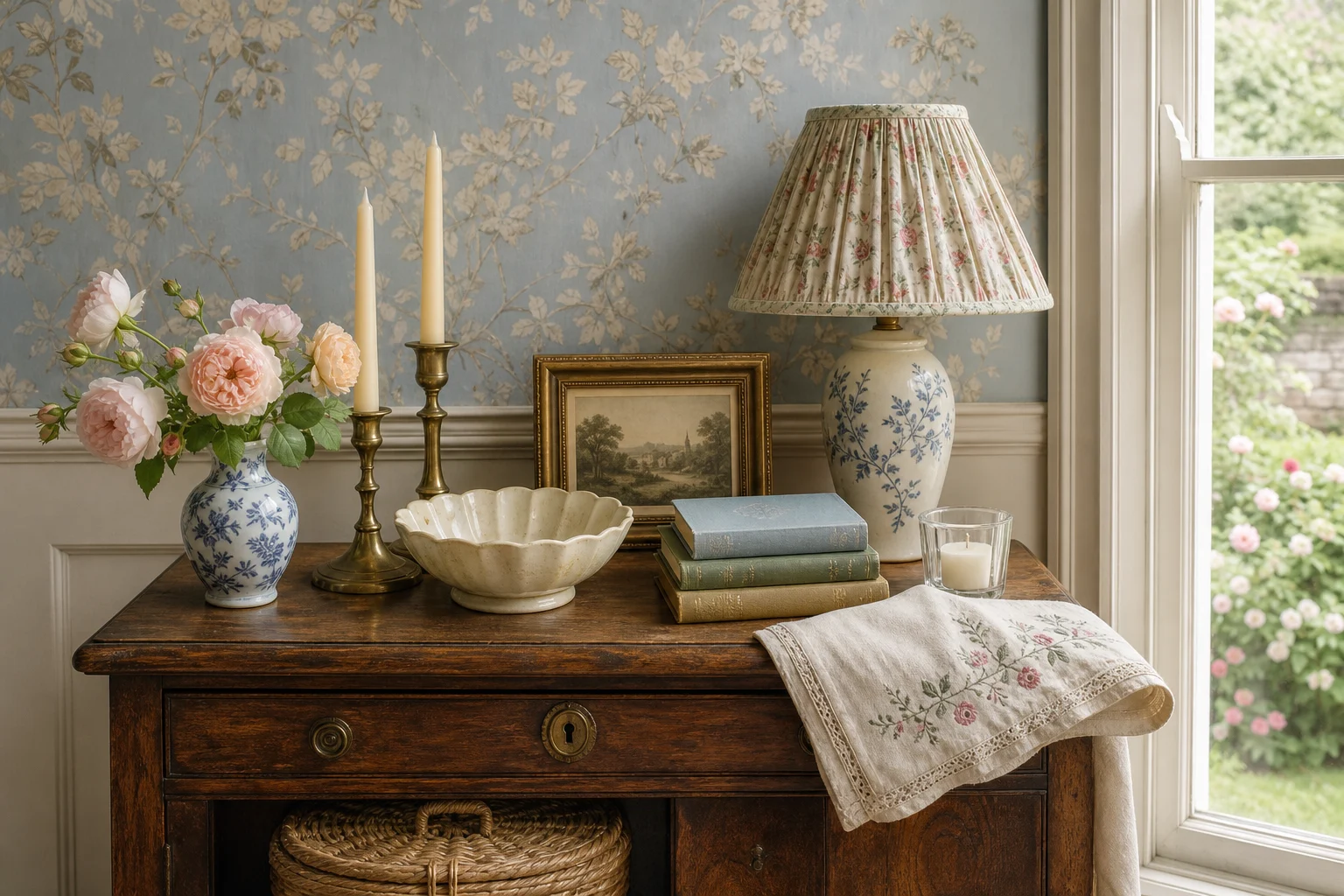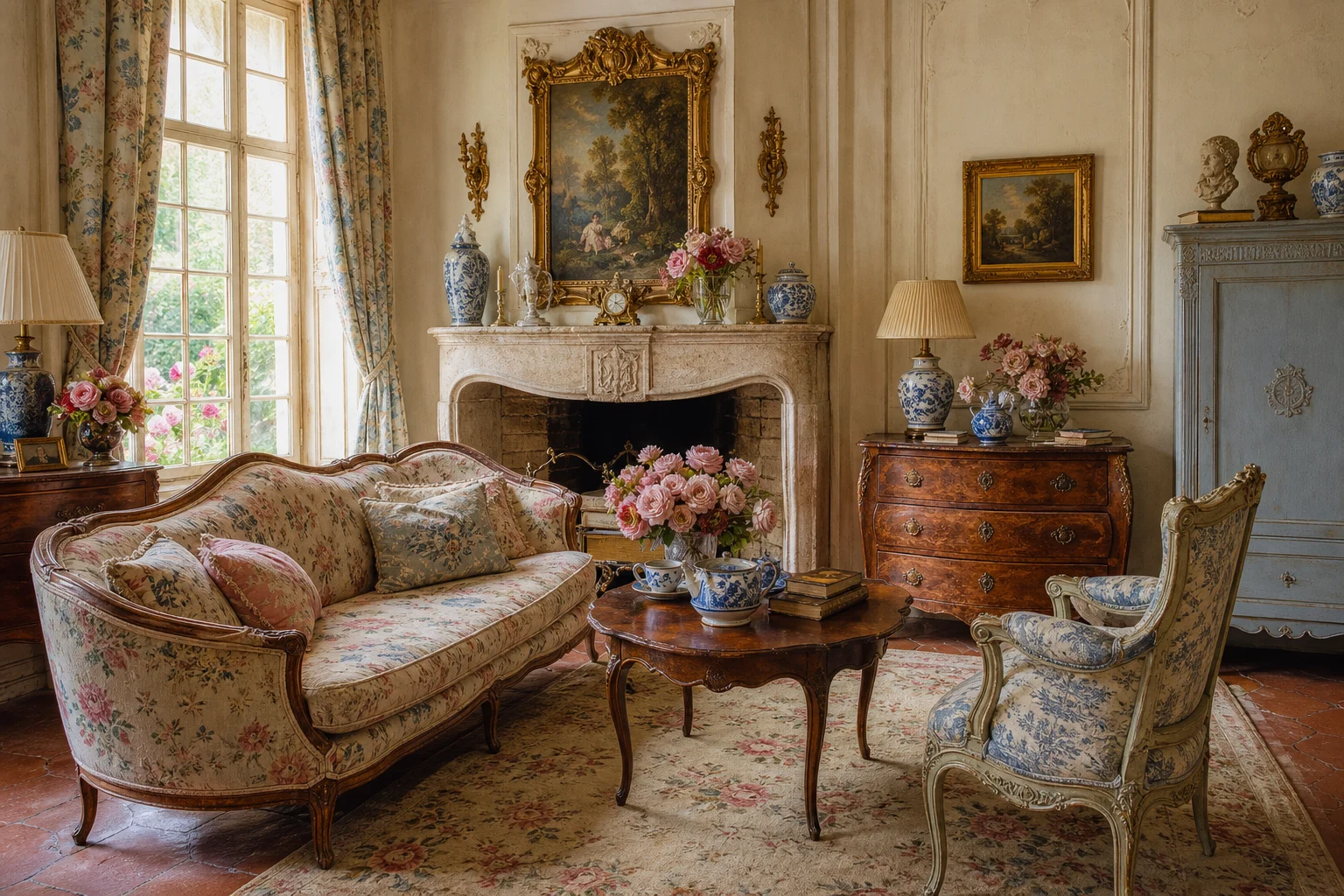
These two get compared constantly, usually as a choice between minimal and cosy. That framing misses the actual difference, which is temperature. Scandinavian interiors are built on cool light — grey-whites, pale wood, a lot of empty wall. French country is built on warm light — cream, ochre, honeyed wood, faded pattern.
This matters practically, because temperature is the one thing you cannot mix casually. You can absolutely combine Scandinavian restraint with French country warmth, and some of the best rooms do. But you have to pick one temperature and hold it, or the room reads as unresolved rather than eclectic. Below is what each tradition is actually made of, and where the honest overlap is.
Scandinavian style: light, clean, functional
Born of long, dark Nordic winters, Scandinavian design maximizes light and simplicity. Think pale woods (birch, ash), crisp whites, soft greys, and a devotion to hygge — that untranslatable sense of cozy contentment. Furniture is low, functional, and beautifully made; ornament is minimal. The mood is calm, airy, and uncluttered.
Key markers: white walls, blond wood, wool and sheepskin textures, a single sculptural pendant, and a strictly edited palette.

Neutral French Country Accent Chair
A restrained neutral palette keeps the room calm while the curved traditional frame brings in French-country warmth.
View on AmazonAffiliate link — I may earn a commission.French country style: warm, collected, romantic
French country (or campagne) is the warmer cousin. It layers aged woods, wrought iron, toile and linen, soft florals, and plenty of patina. Nothing is too perfect — a distressed armoire, a chipped ceramic pitcher, and a well-worn farm table are features, not flaws. The palette leans warm: cream, ochre, sage, faded blue, and terracotta.
Key markers: distressed wood, curved lines, natural stone, vintage textiles, fresh flowers, and a lovingly collected look.

Toile Wallpaper
A single toile wall introduces history and pattern without sacrificing an edited, light-filled base.
View on AmazonAffiliate link — I may earn a commission.The Weekly Edit
One email a week — new finds, seasonal styling, and the pieces I'd actually put in my own home. No spam, unsubscribe anytime.
Side by side
- Palette: Scandi = cool whites & greys · French country = warm creams & ochres
- Wood: Scandi = pale & smooth · French = dark, aged, distressed
- Lines: Scandi = clean & geometric · French = curved & ornamental
- Feeling: Scandi = serene minimalism · French = romantic warmth
You don't have to choose. The best rooms borrow the calm of one and the soul of the other.
How to blend them: "Scandi-French"
The middle ground — sometimes called Scandi-French or "modern rustic" — is where many of today's most admired interiors live. Keep the Scandinavian discipline of a pale, edited base, then add French warmth through one or two aged, characterful pieces: a vintage print, a patinated brass candle holder, a linen slipcover. The result is calm but never cold.

Turned Wood Candle Holders
Warm turned wood adds patina and French soul while preserving a simple, disciplined silhouette.
View on AmazonAffiliate link — I may earn a commission.Which is right for you?
Choose Scandinavian if you crave calm, order, and light. Choose French country if you love warmth, history, and a collected look. Or do what we'd suggest: start with a Scandinavian base and layer in French soul over time. For the underlying principles, read What Is Quiet Luxury Home Decor?