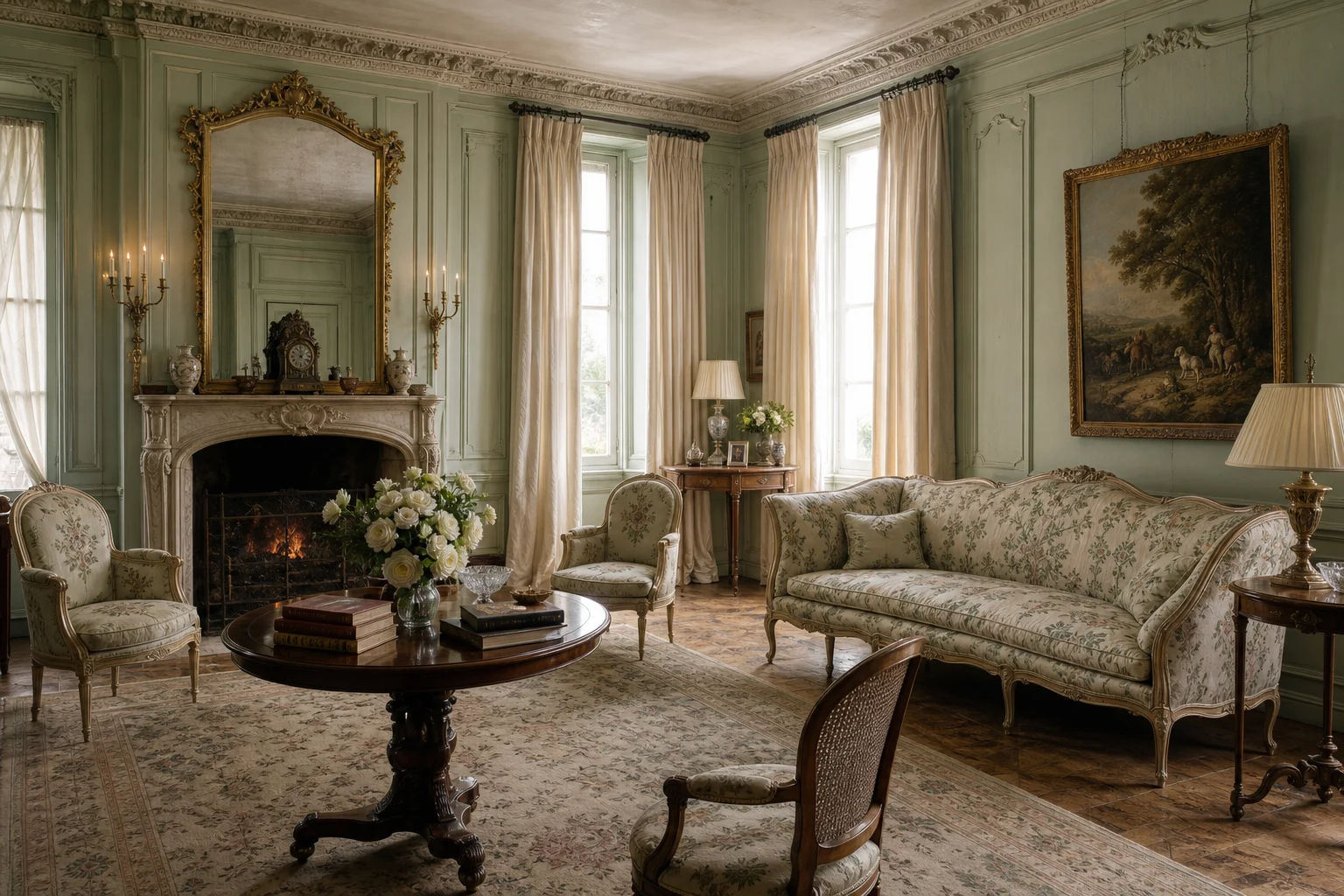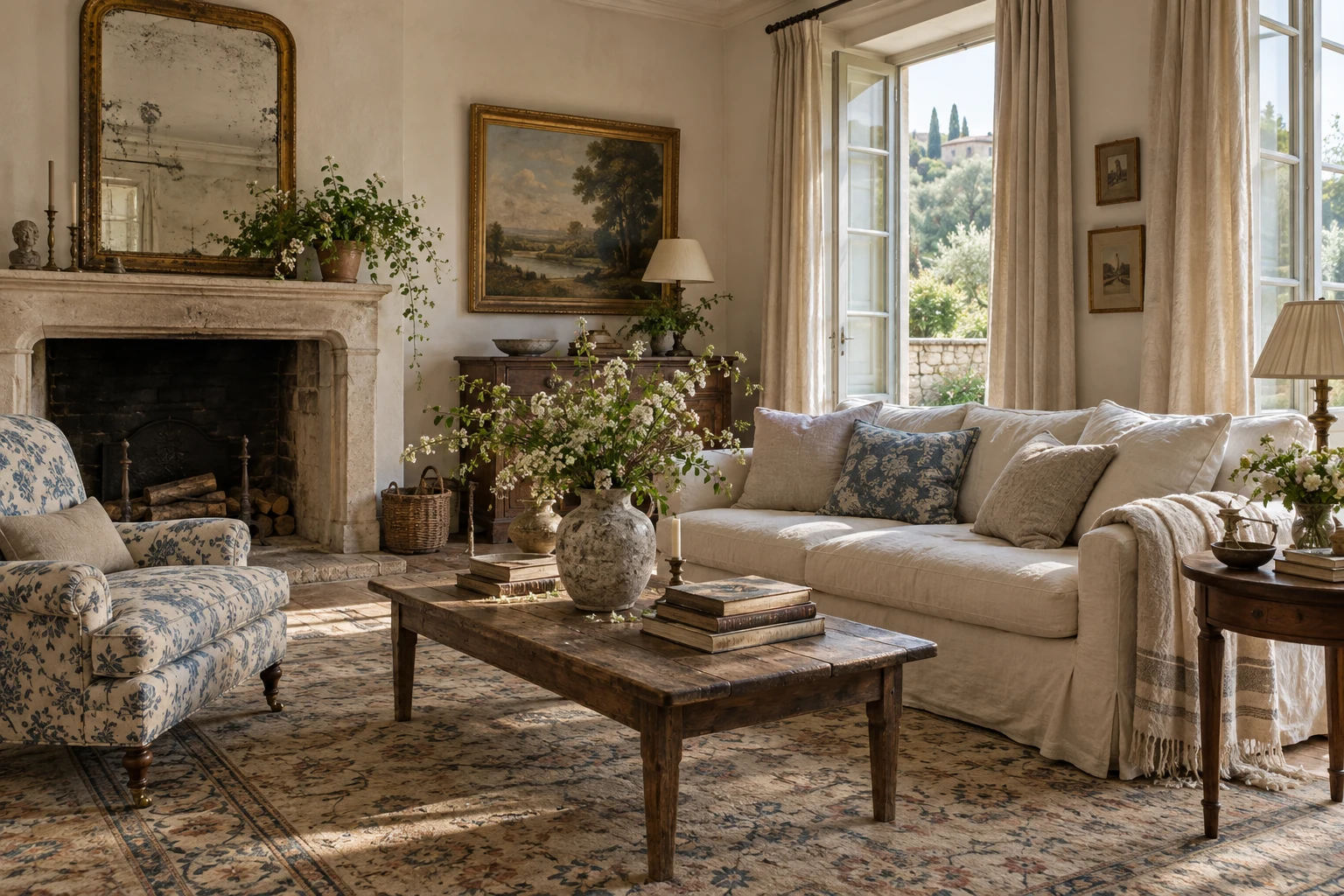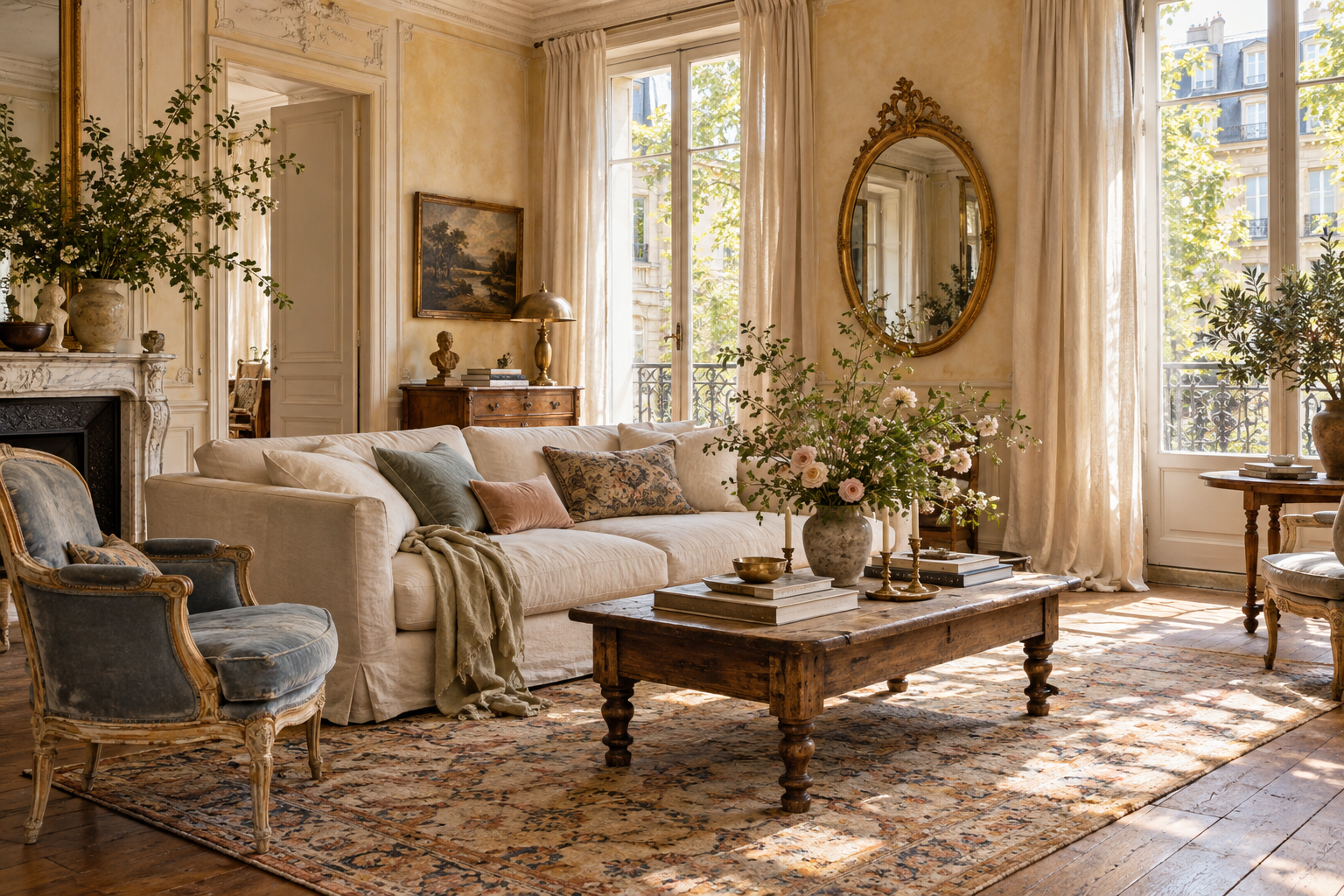
The rooms that feel most settled are rarely built from one period, one shop, or one idea of what a home should look like. They have an older piece with a little gravity, a newer piece that makes everyday life more comfortable, and enough space between them for the relationship to feel natural.
That is the quiet advantage of mixing old and new. It keeps a room from becoming a period set, but it also keeps it from feeling as though everything arrived in the same delivery. In a romantic European home, history and comfort belong together: an antique frame above a simple linen sofa, an old wood table beside a clean lamp, a timeworn vessel holding branches cut this morning.
Begin with one piece that carries history
You do not need a room full of antiques to create a sense of age. Start with one piece that has shape, material, or memory: a walnut chest, a carved mirror, a small gilt frame, a weathered table, or a chair with a slightly imperfect finish. It should not be the room's costume. It should be its anchor.
Look for the things that naturally hold attention without demanding it. Old wood has grain and variation. Aged brass catches light differently from polished metal. A painting in a soft frame gives a wall somewhere to rest. One piece like this can make a new room feel less blank because it gives everything around it a point of reference.
Let the new pieces do the quiet work
New furniture is often at its best when it takes care of comfort, proportion, and ease. A deep linen sofa, a straightforward upholstered bed, a practical rug, or a well-made lamp can make an older room feel ready for the way people actually live now. The goal is not to disguise a new piece as an antique. It is to choose one with enough softness that it does not interrupt the story.
Favour materials that grow kinder with time: washed linen, cotton, oak, cane, unlacquered brass, stone, and ceramics with a handmade edge. Simple silhouettes are useful here because they let the older pieces keep their character. A new sofa does not need a carved leg to belong beside an antique table; it only needs warmth, good scale, and a finish that does not feel overly sharp.
Match the feeling, not the date
The old and the new do not need to come from the same decade. They need to share a mood. A contemporary lamp can work near an old landscape when both have a quiet, softened presence. A clean-lined chair can sit beneath a centuries-old-looking mirror when the wood tones relate. This is why colour, texture, and proportion matter more than labels.
Try choosing two or three threads to repeat through the room: warm wood, chalky cream, faded blue, woven texture, a touch of brass. These small continuities give the eye a path from one piece to the next. The result feels cohesive without looking matched.
Old pieces give a room memory. New pieces give it room to live.
Avoid making all the old pieces live in one corner
Sometimes a room looks divided into a new side and an antique side: one vintage chair placed beside a modern sofa, a collection of inherited objects gathered tightly on a single shelf. Instead, let the older elements travel through the room. A frame on the wall, a small table beside the sofa, a vase on the mantel, and a wooden stool near the window will feel more convincing than a single "antique corner."
Spread the sense of history gently. It does not have to be obvious. Even a newer room feels more layered when there is a little age at eye level, underfoot, and near the hand—art above, a softened rug below, and a table or ceramic piece close enough to use.
Give contrast a little breathing room
When an old piece is beautiful, give it room to be seen. Do not crowd an ornate mirror with six smaller frames. Let an antique chest have a simple lamp, a small bowl, and perhaps one picture above it. The contrast with the quieter new pieces is what makes the room feel considered rather than busy.
The same is true of colour. If you have a rich old wood table, let pale linen, soft plaster, or a faded rug bring light around it. If a vintage painting is dark, balance it with curtains that soften the window rather than another heavy object beside it. A room with a little contrast is more alive; a room with contrast everywhere is simply loud.
The Weekly Edit
Romantic European room ideas, new journal stories, and considered finds—sent occasionally, never endlessly.
Let useful objects bridge the gap
The most effortless mix often happens through the small practical things. A new linen throw on an old chair. Fresh branches in an old urn. A contemporary book beside a worn brass candlestick. These combinations make a room feel current without losing its sense of history.
They also keep the room from becoming too precious. The older pieces are not there to be protected behind glass; they are there to make the daily rituals feel more beautiful. Use the old bowl for fruit. Put a lamp on the antique table. Let the newer rug soften the floor beneath a chair that has been loved for years.
Allow the room to change slowly
The most convincing spaces are not completed at once. A room may begin with a new sofa because that is what the family needs, then gain a secondhand table, an inherited painting, a better lamp, and a small object found while travelling. Over time, those choices start to speak to one another.
There is no need to rush the story. Choose the new pieces carefully, bring in older elements when they truly add something, and leave a little room for the unexpected. The goal is not a home that looks old. It is a home that feels as though it has a past, a present, and plenty of life still ahead of it.
For more on building rooms with this kind of depth, continue to Why Some Rooms Feel Collected—and Others Feel Decorated, or read The European Home: A Guide to a Collected, Timeless Interior.