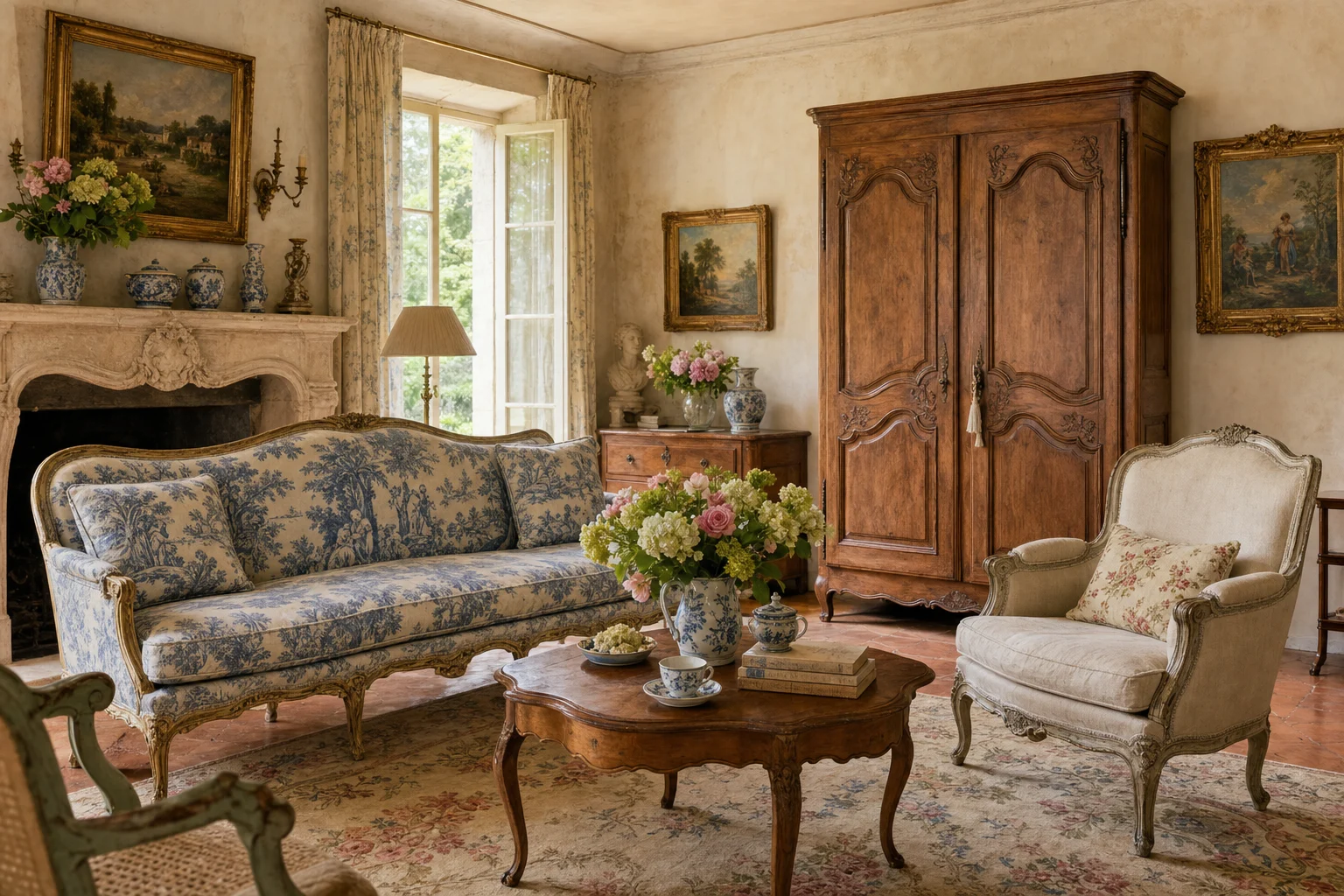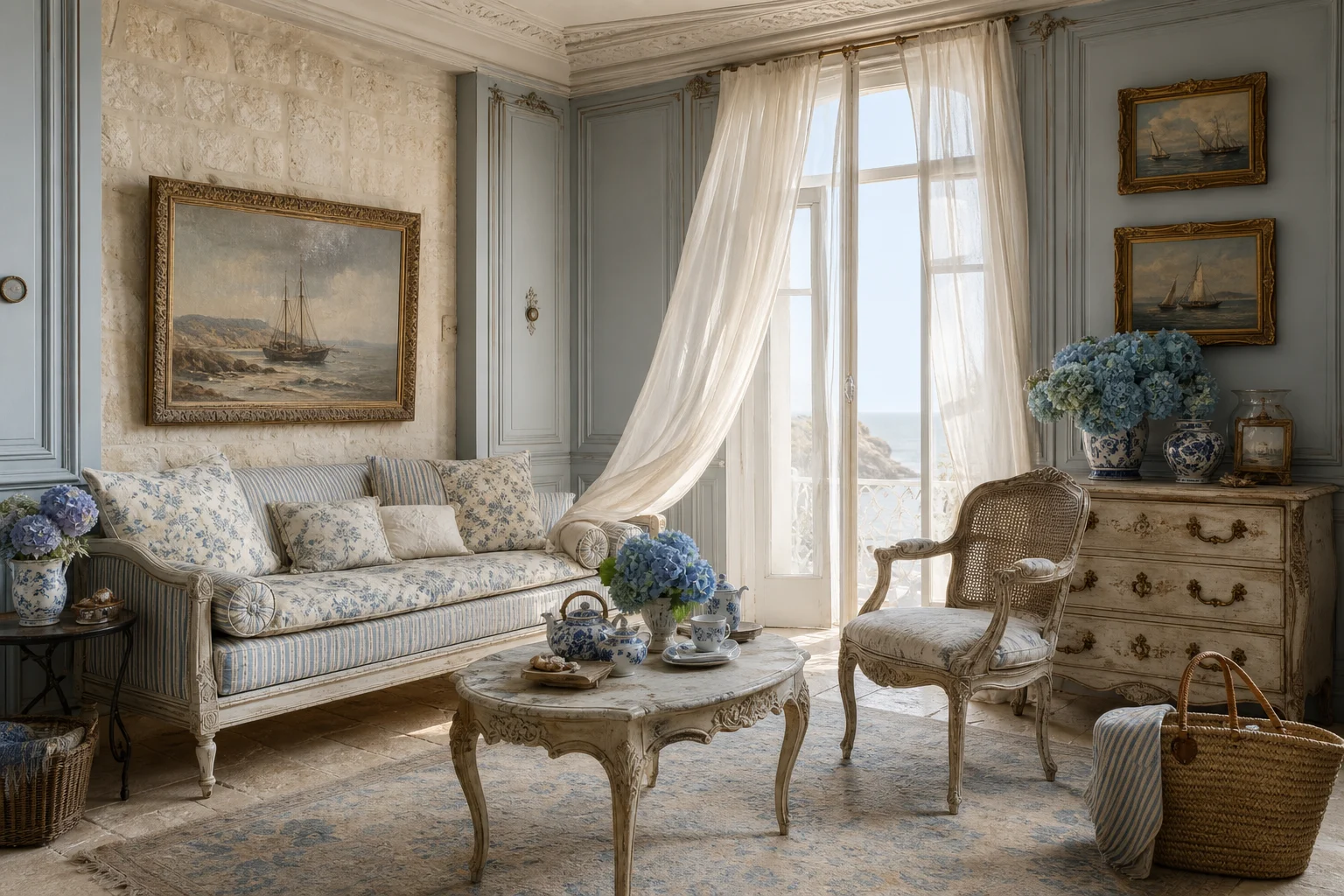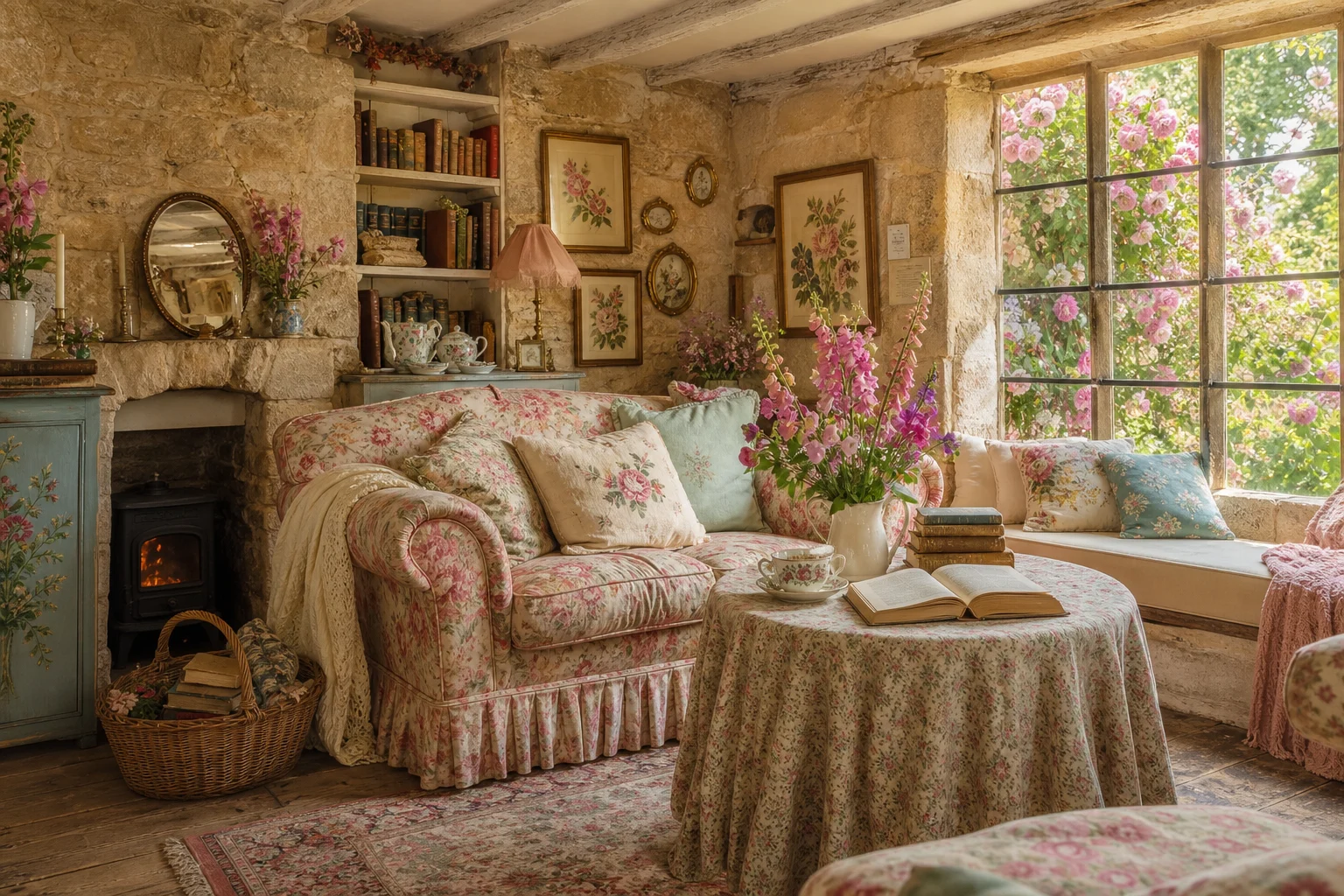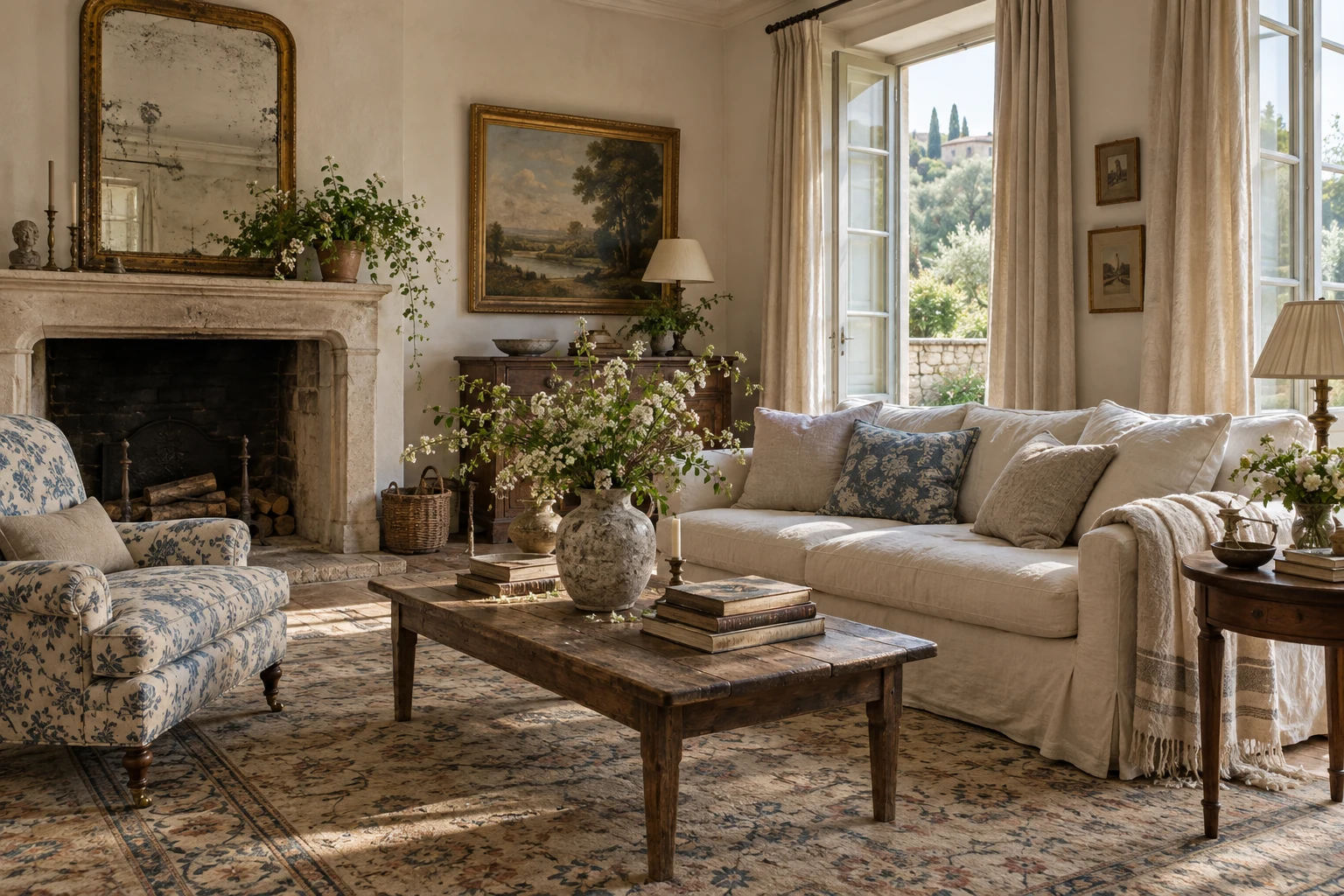
European style is not one look, one country, or a checklist of antiques. It is a way of noticing: the warmth of old wood beside pale linen, the usefulness of a beautiful object, the relief of a room that has been allowed to grow slowly. A French country house, an English cottage, and a light coastal room may have very different personalities, but the best of each feels lived in, personal, and quietly at ease.
The aim is not to recreate someone else’s home. It is to borrow the principles that make these rooms feel so lasting: natural materials, gentle contrast, a little history, and enough restraint for each beautiful piece to be seen.
This post contains affiliate links. As an Amazon Associate I earn from qualifying purchases, at no extra cost to you. Every featured product comes from the European Home Edit Pinterest boards and was selected for this particular guide.
Begin with the feeling, not the theme
A room can feel European without announcing its inspiration at every turn. Instead of beginning with “French country” or “English cottage,” begin with a few words that describe the atmosphere you want to come home to: sun-softened, graceful, bookish, garden-like, coastal, or quietly formal. Those words will make better decisions for you than a strict style label.
Then choose one element that can carry the room: a beautifully worn rug, a curtain with a soft drape, an old-looking mirror, or a piece of wood furniture with weight. When the foundation has character, the smaller layers can stay simple.

Vintage European Area Rug
A faded, traditional rug gives the room its first layer of history and keeps even new upholstery from feeling too new.
View on AmazonAffiliate link · I may earn a commission.Let the room be warm before it is decorated
European rooms are often grounded by materials rather than colour. Think warm ivory instead of stark white, natural linen instead of crisp synthetic fabric, and oak or walnut instead of glossy painted furniture. These choices create a background that makes pattern, art, and collected objects feel softer.
Window treatments matter more than they are usually given credit for. Linen changes the quality of daylight, framing it rather than blocking it, and adds an easy vertical texture to a room that otherwise has mostly hard surfaces.

Natural Linen Curtains
Natural linen brings softness and a gentle, filtered light that works equally well in a French coastal room, a country bedroom, or a classic living room.
View on AmazonAffiliate link · I may earn a commission.Choose furniture with weight and gentleness
The furniture in a collected room does not all need to be old, but it should have an honest shape. Look for turned legs, softened corners, visible grain, and silhouettes that feel useful before they feel decorative. A small wood table beside a chair is more convincing than a perfect matching set spread across the room.
Mixing is part of the point. One graceful table can sit beside a tailored sofa; a floral pillow can soften a striped chair. Let the pieces have different stories, but keep a common thread in their warmth, scale, or material.

Traditional Wood End Table
The fluted drawer detail and rich wood finish provide the useful, grounding note that makes lighter fabrics and painted details feel more believable.
View on AmazonAffiliate link · I may earn a commission.Use old-world detail with a light hand
An ornate mirror, a softly coloured landscape, or a piece of glazed pottery can give a room a sense of memory. The key is placement, not quantity. Let one mirror catch the window light. Let one painting bring a muted colour into the room. Keep enough wall and tabletop visible that the objects feel chosen, not collected for their own sake.
A room becomes interesting when its useful things and beautiful things begin to overlap.

Ornate Gold Wall Mirror
The arched silhouette and carved gilt detail give an entry, mantel, or bedroom wall a little architecture and reflect the softer light back into the room.
View on AmazonAffiliate link · I may earn a commission.The Weekly Edit
One email a week with new finds, seasonal styling, and the pieces I would actually put in my own home. No spam, unsubscribe anytime.
Bring in texture before more colour
When a room feels flat, the answer is rarely to add more things. It is usually to vary the finish: a matte ceramic vase beside a polished frame, a linen sofa beside a wood table, a woven basket near a smooth painted wall. Texture adds depth without making the palette busier.
Fresh branches or loose flowers are the easiest final layer. They make a room feel in motion and prevent a carefully considered arrangement from feeling precious.

Textured Stoneware Vase
The softly aged ceramic finish gives branches and garden flowers a warm, unfussy place to land on a console, table, or mantel.
View on AmazonAffiliate link · I may earn a commission.Make pattern feel inherited, not matched
Floral, check, stripe, and small botanical patterns all belong in the European home—but they need space between them. Choose one pattern with presence, then echo it quietly through a smaller scale or a related colour. A room with one floral textile, one faded rug, and plenty of solid linen will feel far more layered than one where every surface carries the same motif.

Blue Floral French Country Pillows
The faded botanical motif gives neutral seating a personal, European note while keeping the pattern gentle enough to mix with linen, stripes, or a timeworn rug.
View on AmazonAffiliate link · I may earn a commission.Know when the room is finished
European style is often misread as maximalism. It is not. The rooms that last have breathing room: a clear corner of the tabletop, a quiet wall beside the art, a chair without three cushions arranged on it. Stop when the room feels welcoming rather than displayed.
Start with one grounding piece, add something soft, then add one object with a trace of age. Live with the room before you finish it. The most convincing European interiors feel as though they have been built over time because, in the best sense, they have.
For a closer look at the individual directions within this larger approach, continue with our French Country guide, explore the lighter layers of French Coastal, or lean further into pattern with the English cottage and cottagecore guide.