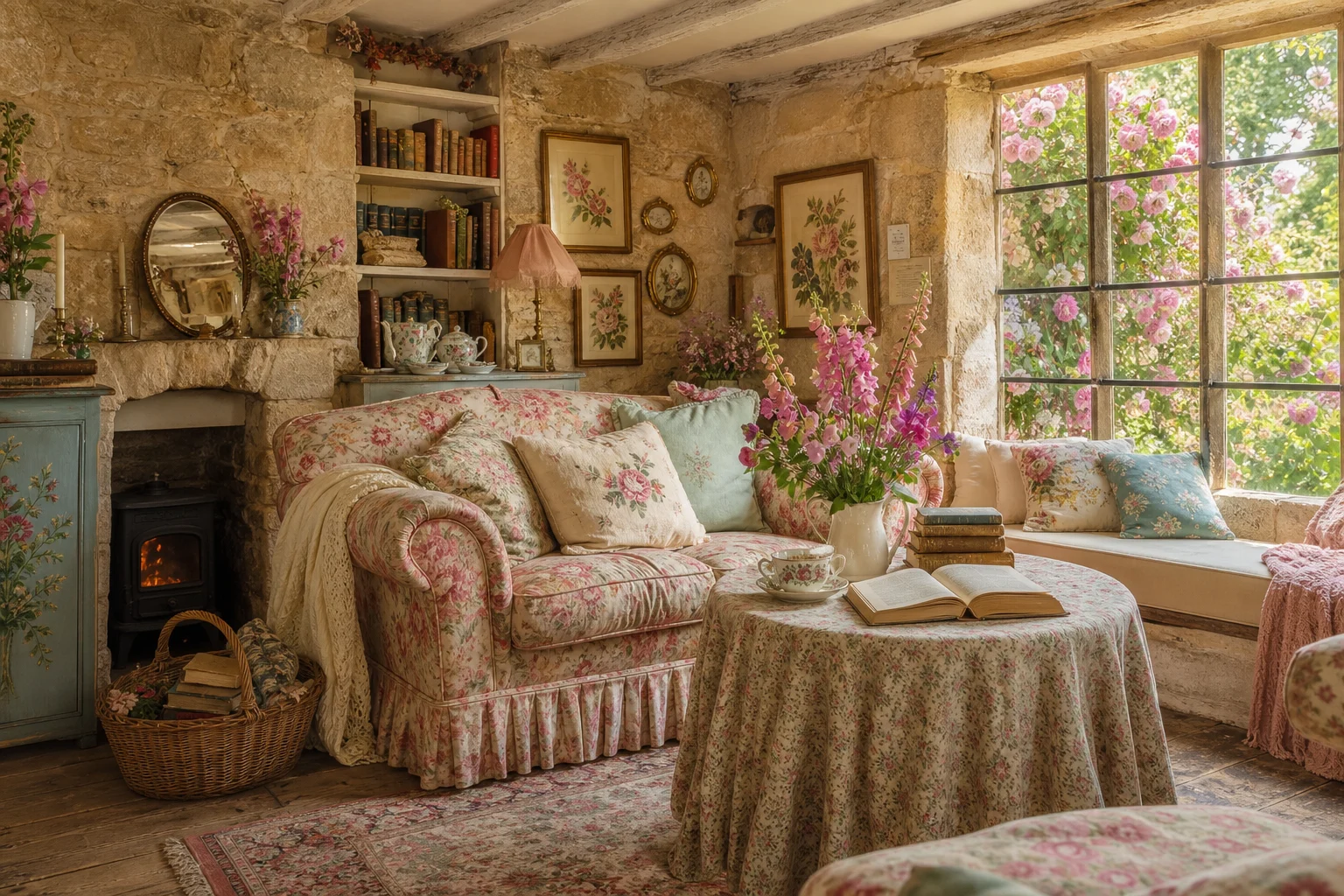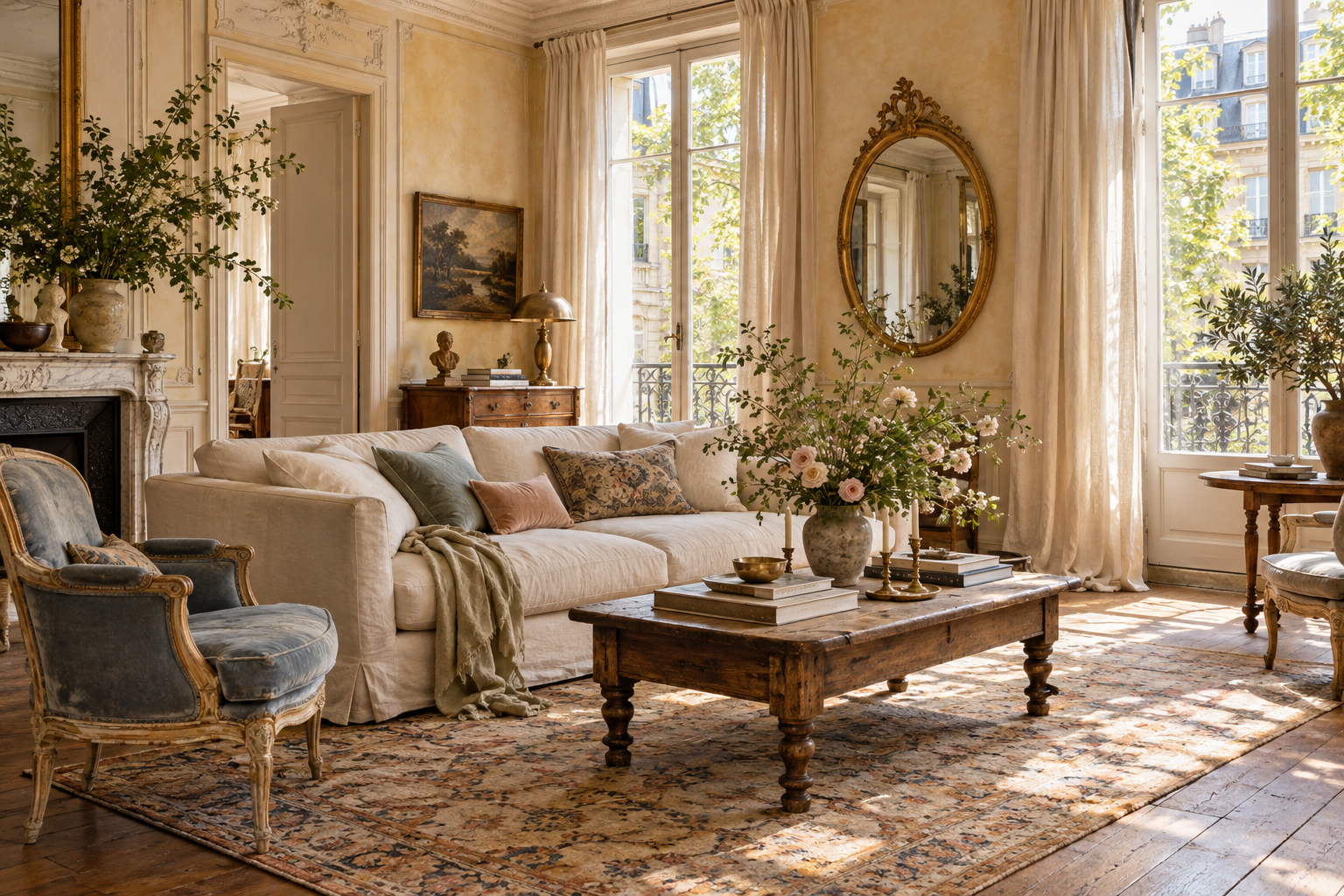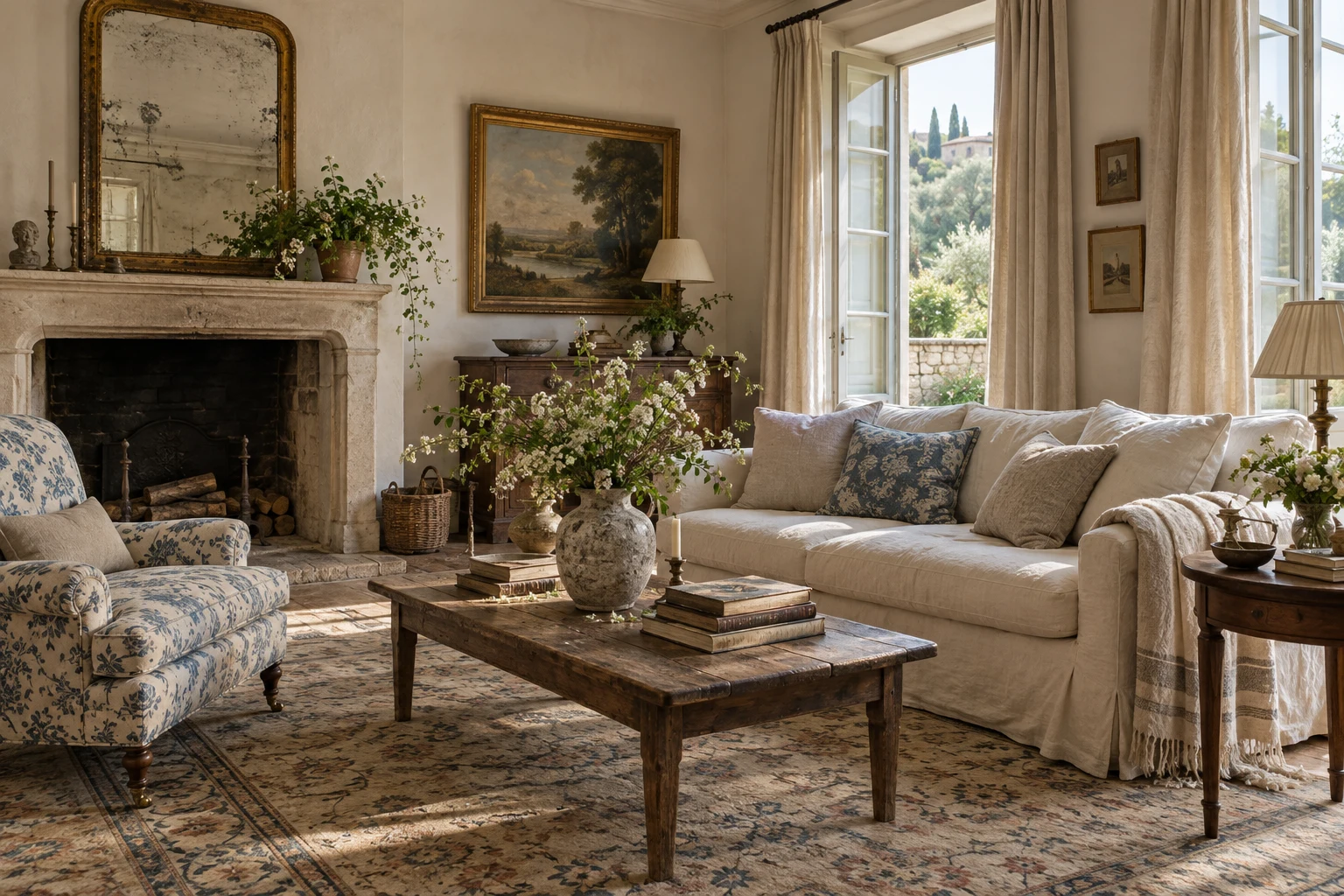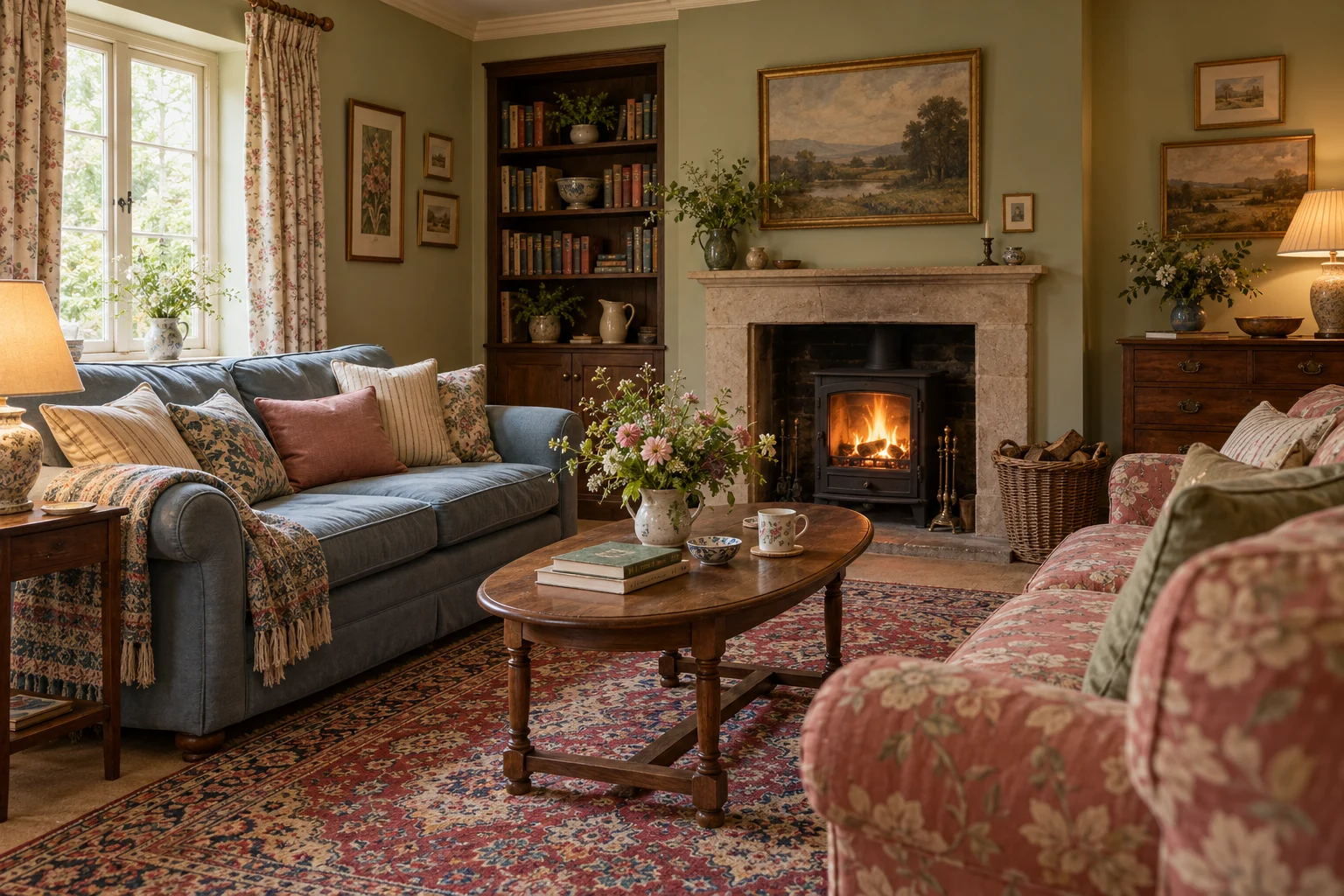
An English country room often makes its invitation through a chair. The seat looks deep enough to settle into, there is a lamp close by, and a little table leaves somewhere for a cup. You notice the faded pattern on the curtain and the painting above the chest, but first you think about sitting down.
That welcome is a useful place to begin. English country decorating can hold a great deal of beauty: generous fabric, polished brown furniture, a surprisingly strong wall colour. What keeps it comfortable is the sense that everything belongs to an ordinary day. The books are read. The lamps are switched on before supper. The prettiest chair is still a chair someone uses.
You do not need an old house or a view across fields to bring that feeling home. Start with the way you want a room to work, then give it colour and character through the pieces you choose to live with.
Make comfort the first decision
Before choosing a print, look at how the room is arranged. Can two people talk without turning awkwardly in their chairs? Is there somewhere to put down a drink? Does the reading light reach the seat where you actually read?
Place a chair near the sofa so the seating feels connected and conversation comes easily. Leave a clear route through the room, and let a small table sit within easy reach rather than centring every piece on an imaginary line. Upholstery can be generous without filling the floor. One comfortable sofa and a well-placed chair will do more for the room than several occasional seats nobody chooses.
The useful pieces deserve as much consideration as the decorative ones. A small wood table gives a soft armchair some structure; a drawer keeps the less beautiful necessities close without leaving them on display. Its finish need not match the other furniture exactly.
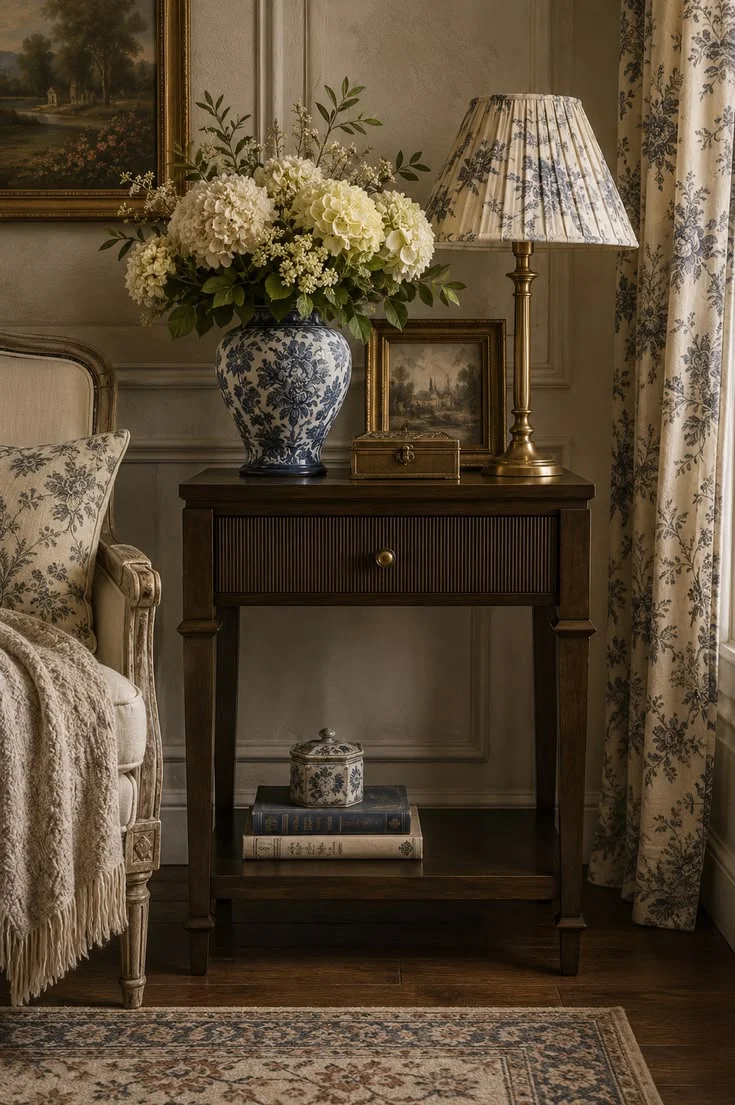
Traditional Wood End Table
A useful companion to a generous chair, with a drawer for the everyday things and a lower shelf for a few books.
View on AmazonAffiliate link · I may earn a commission.Choose colour you would enjoy all afternoon
English country interiors need not be pale. A rose-coloured wall can make a brown chest look particularly handsome. Olive gives faded red somewhere to settle; a little blue lifts warm cream. The pleasure is often in the relationship between colours rather than in any one fashionable shade.
Take your starting point from something you already like: a rug, the background of a painting, or the smallest leaf in a curtain. Use one of its quieter colours over a larger area, then bring a deeper note into a chair or cushion. The repetition can be slight. A green thread in the fabric may be enough to connect a green lamp across the room.
Try paint on more than one wall and look at it through the day. A colour beside a sunny window can feel quite different in the corner where you sit in the evening. If you prefer pale walls, keep them; a room can gain depth through furniture and textiles without becoming dark.
Mix patterns with a little space between them
A floral curtain beside a checked cushion has an ease that a perfectly matched set rarely offers. The patterns have different jobs. The floral brings movement, while the check gives the eye something simpler to follow.
Change the scale as well as the design. A larger, loose floral can sit comfortably beside a narrow stripe and a plain woven fabric. Several prints of the same size are more likely to compete, particularly when their colours are equally strong. If the combination feels busy, try removing one pattern before adding another colour to make it work.
A cushion is a forgiving place to begin. Against plain upholstery, a darker floral gives the room some depth without asking you to replace the sofa. Repeat one colour elsewhere, and leave enough of the seat free for someone to sit comfortably.
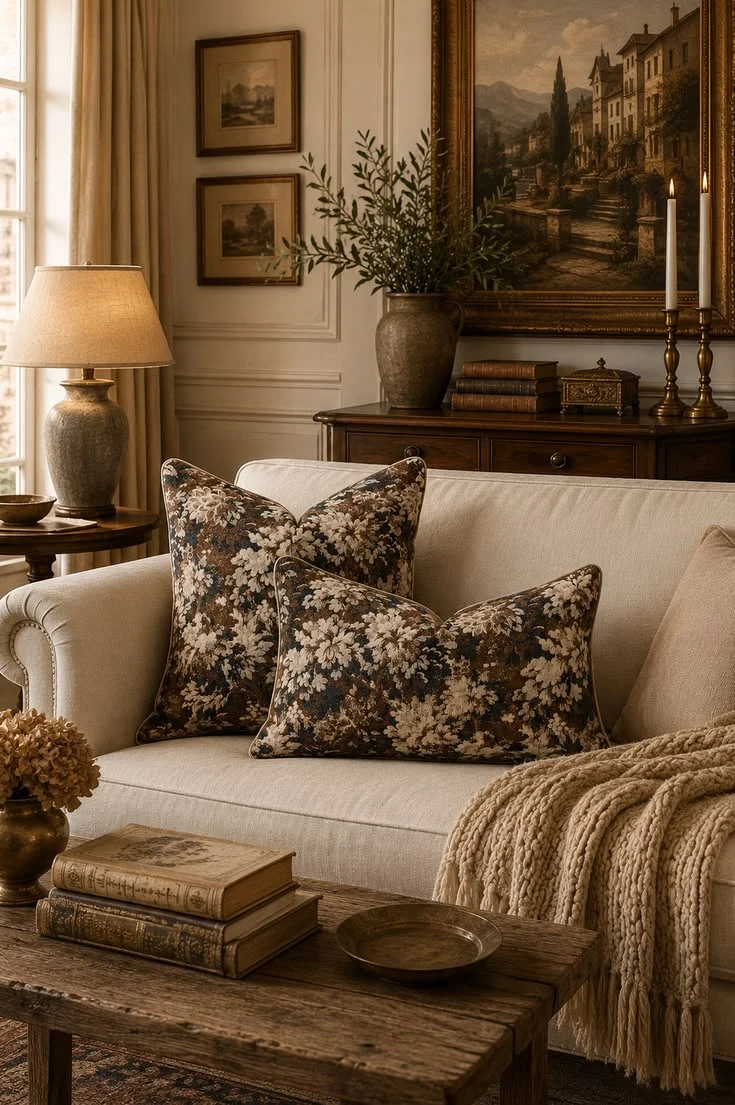
Vintage Floral Throw Pillows
A deeper floral note for a plain sofa. Let the cream in the pattern connect with the upholstery, then try a small stripe alongside it.
View on AmazonAffiliate link · I may earn a commission.Let the furniture look as though it met gradually
A painted cupboard can live beside a dark wood table. An upholstered stool need not repeat the fabric on the chair. When the pieces differ, the room begins to suggest individual choices rather than a suite bought for one photograph.
Keep something in common, whether it is the scale of the furniture or a curve that appears in more than one place. A substantial chest may need a lamp with enough presence to sit on it; a delicate little chair may be happier beside a smaller table. Those relationships matter more than matching wood tones.
Nor does every piece have to be old. Choose new furniture for its usefulness and shape, then make room for secondhand finds or family pieces when they suit the room. You can read more about that balance in our guide to mixing old and new in a European home.
The room should make it easy to stay: a comfortable seat, a light to read by, and somewhere to put down your cup.
Give the different pieces a shared ground
A rug brings the seating area together, helping the chairs and tables feel like part of one inviting space. Let it reach beneath the front feet of the main seating where the room allows, rather than leaving it as a small island under the coffee table. Measure around the furniture before choosing the size.
If the curtains and cushions already carry colour, the rug can be gentler. A softened pattern in cream and brown will sit quietly beneath stronger fabrics. If the upholstery is plain, a more colourful rug may provide the starting point for the whole room.
Look beyond the photograph when choosing one. Pile height, care instructions, and the way doors open across the floor matter in a room that is used every day. A vintage-inspired pattern can give the look you enjoy without needing to be an antique.
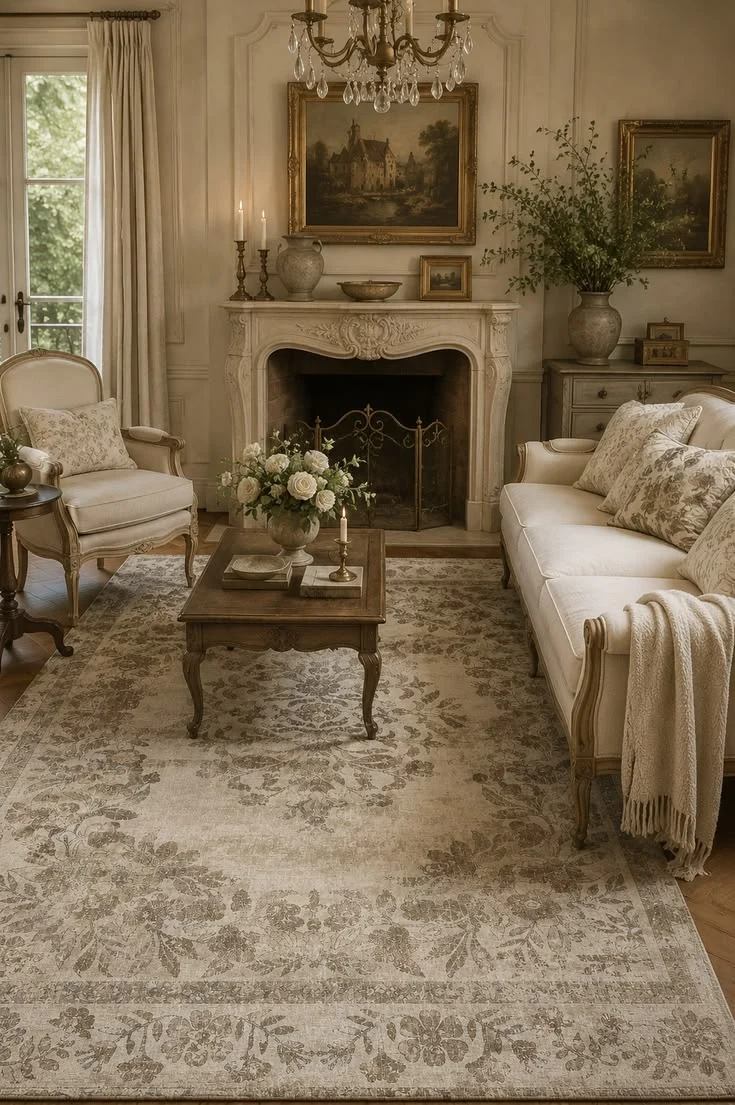
Vintage-Inspired Patterned Area Rug
A quieter foundation when the colour is in the curtains or cushions. Choose the size around your seating arrangement, not just the coffee table.
View on AmazonAffiliate link · I may earn a commission.The Weekly Edit
Romantic European room ideas, new journal stories, and considered finds—sent occasionally, never endlessly.
Bring the light down into the room
As daylight fades, table lamps change the feeling of a room. Light beside a chair makes it a place to read. Another lamp across the room lets the shelves and furniture remain visible, instead of leaving everything beyond the sofa in darkness.
A shade is part of the decorating, too. Pleats bring a small rhythm to a corner; a gently shaped edge softens a straight-sided table. If you choose a patterned shade, give it a simpler background so its detail can be seen.
Check the lamp from the seat where you will use it. The bulb should not glare into your eyes, and the light should fall where you need it. A beautiful base is only half the decision.
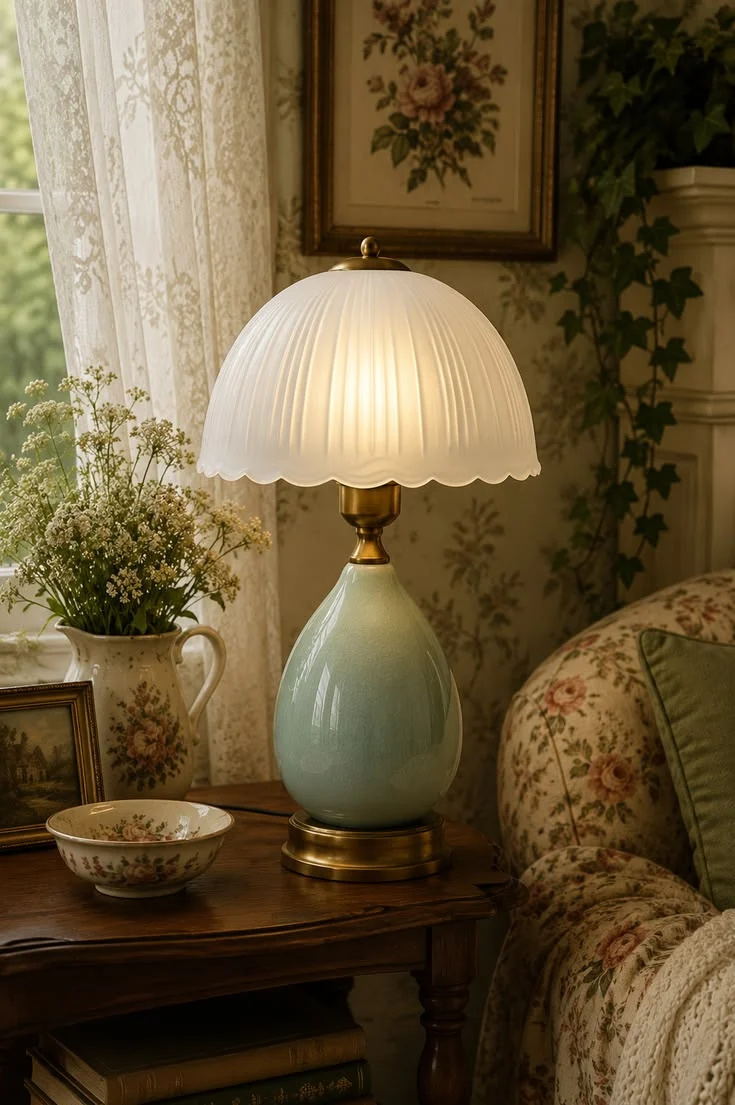
Vintage-Style Ceramic Table Lamp
Pale green and a softly shaped cream shade bring a gentle note to a reading corner. Check the lamp height against your chair and table.
View on AmazonAffiliate link · I may earn a commission.Give the walls something personal to hold
A country landscape, a print found on a weekend away, or a family photograph in an old frame can make a room feel particular to its owner. Choose the picture because you want to look at it, not simply because a patch of wall needs filling.
Landscapes and garden scenes offer colours you can carry into the room, but the collection need not have one subject. A small still life beside a larger picture may be more interesting than a row of identical frames. Lay the arrangement out on the floor first and look at the spaces between the pieces.
English country decorating need not be confined to English subjects. A painting you love can belong quite naturally beside a familiar chair. Its place in the room comes from that relationship, rather than from a label.
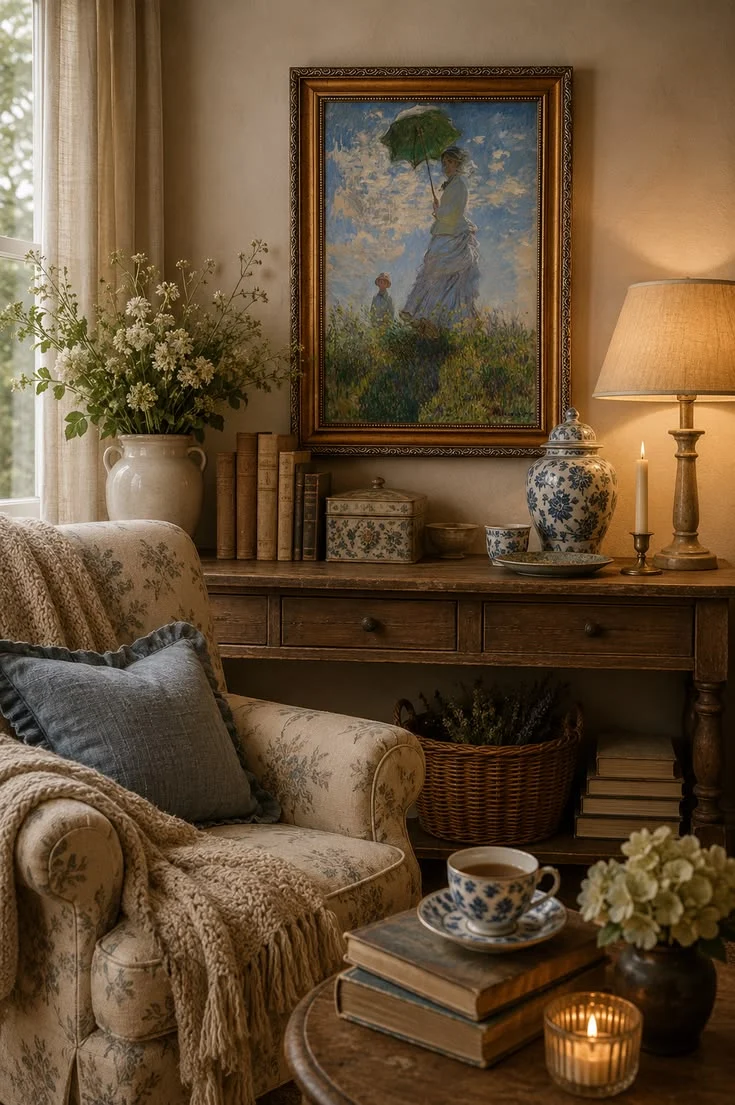
Vintage-Inspired Impressionist Wall Art
A garden scene to enjoy from a favourite chair. Its soft blue and green offer a connection to fabrics elsewhere in the room; check the listing for size and framing details.
View on AmazonAffiliate link · I may earn a commission.Leave room for the ordinary things
Books look most at home where someone might reach for them. A jug of flowers can be small enough to move when the table is needed. A decorative plate may sit among the books without turning the whole shelf into a display.
Allow these details to come from your life. There is no need to buy old-looking books for their spines or to fill a basket before you know what it will hold. Start with what is useful and make space for the things that mean something to you. Empty tabletop is useful, too.
A family resemblance to cottagecore, with a different emphasis
English country and cottagecore share a love of familiar fabric, garden colour, and things that feel cared for. For our English country edit, the emphasis is on comfortable traditional furniture and the relationships between patterns, paintings, and everyday belongings. Our cottagecore guide takes a more whimsical, handmade direction.
The distinction need not police your home. Keep the fanciful object you love. Let it sit beside a more substantial piece of furniture, and see whether the combination feels right. A personal room will always be more interesting than a perfect example of a category.
Begin where you already spend your time
You can start with one corner. Move a lamp to the chair you use most, bring over a small table, and try a cushion that picks up a colour from a painting. Sit there before deciding what else is missing.
The appeal of an English country home grows out of that attention. Pattern has a place, and so does plain cloth. The furniture has character, but the seat is comfortable. When the light begins to fade, you know which lamp to switch on and where you would like to spend the evening.
Continue with The European Home: A Guide to a Collected, Timeless Interior, or explore why some rooms feel collected rather than decorated.
For more comfortable, romantic rooms, follow European Home Edit on Pinterest.