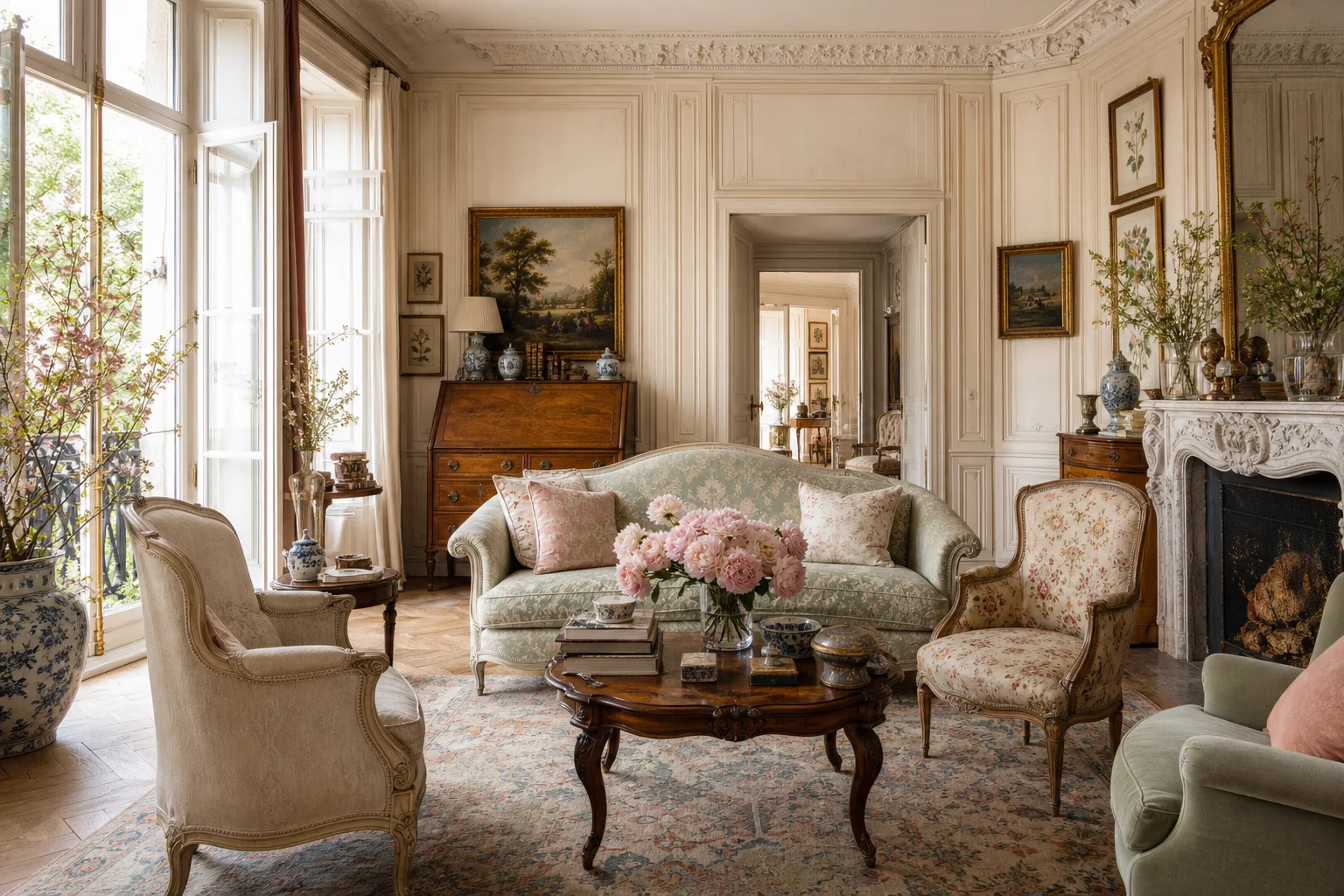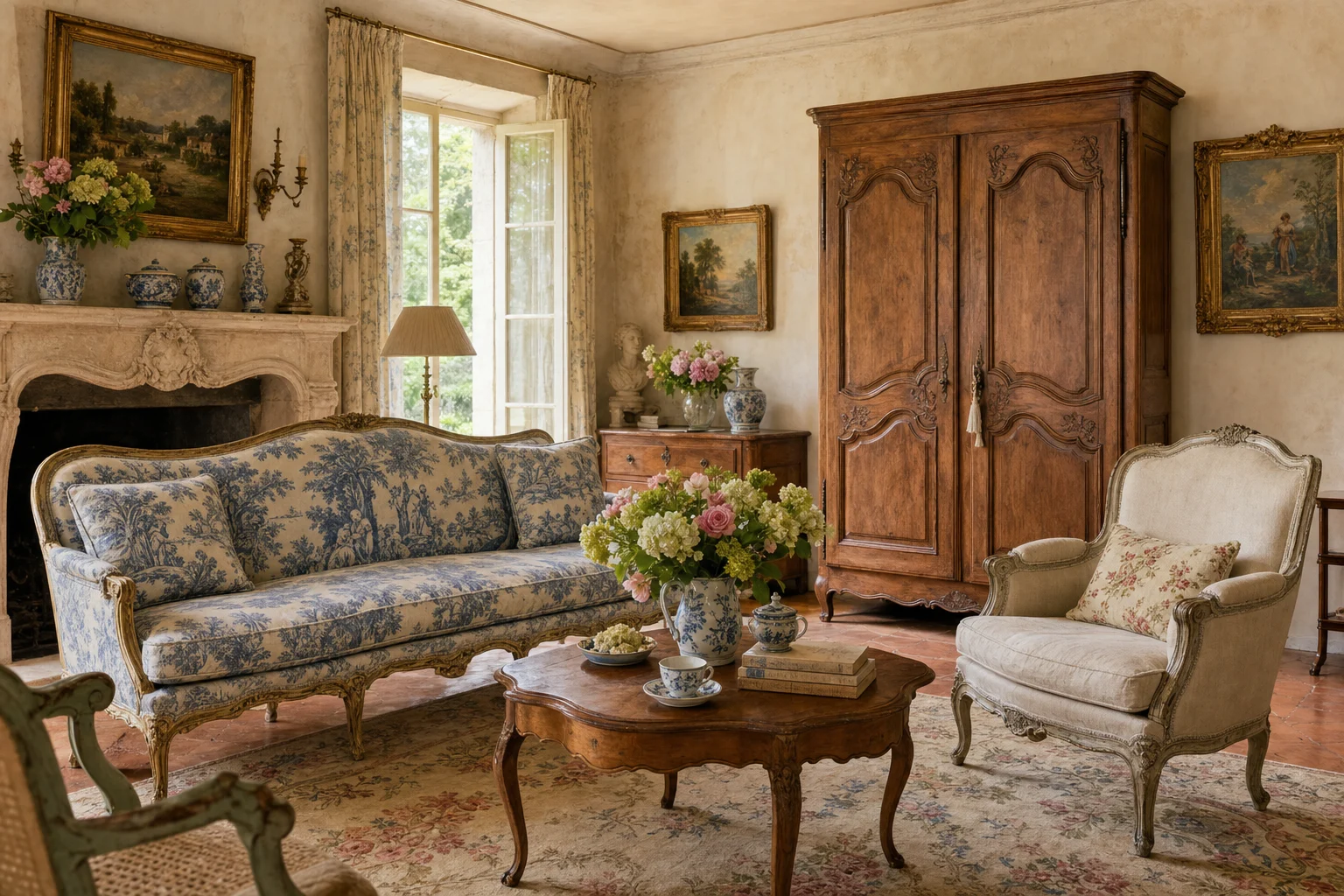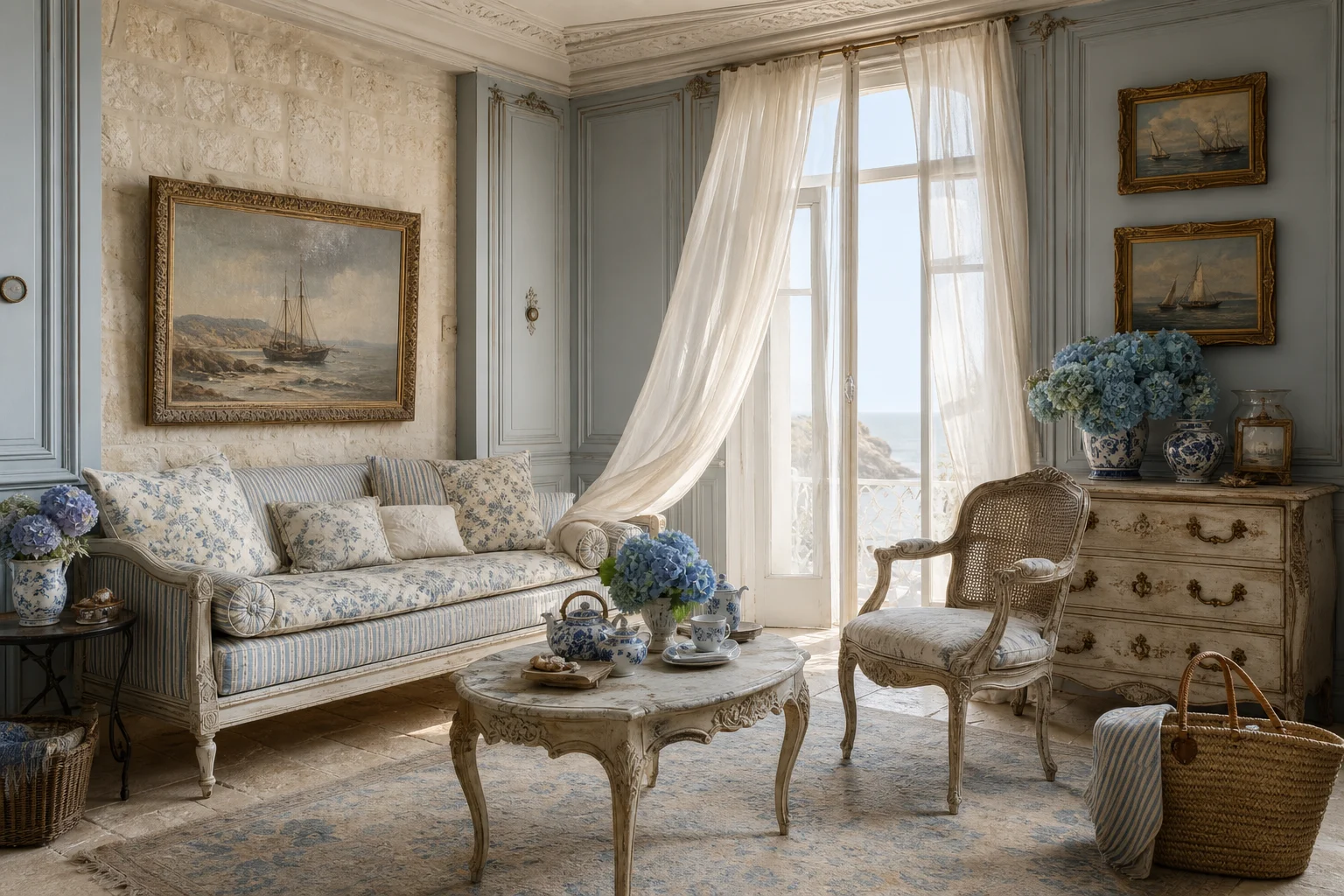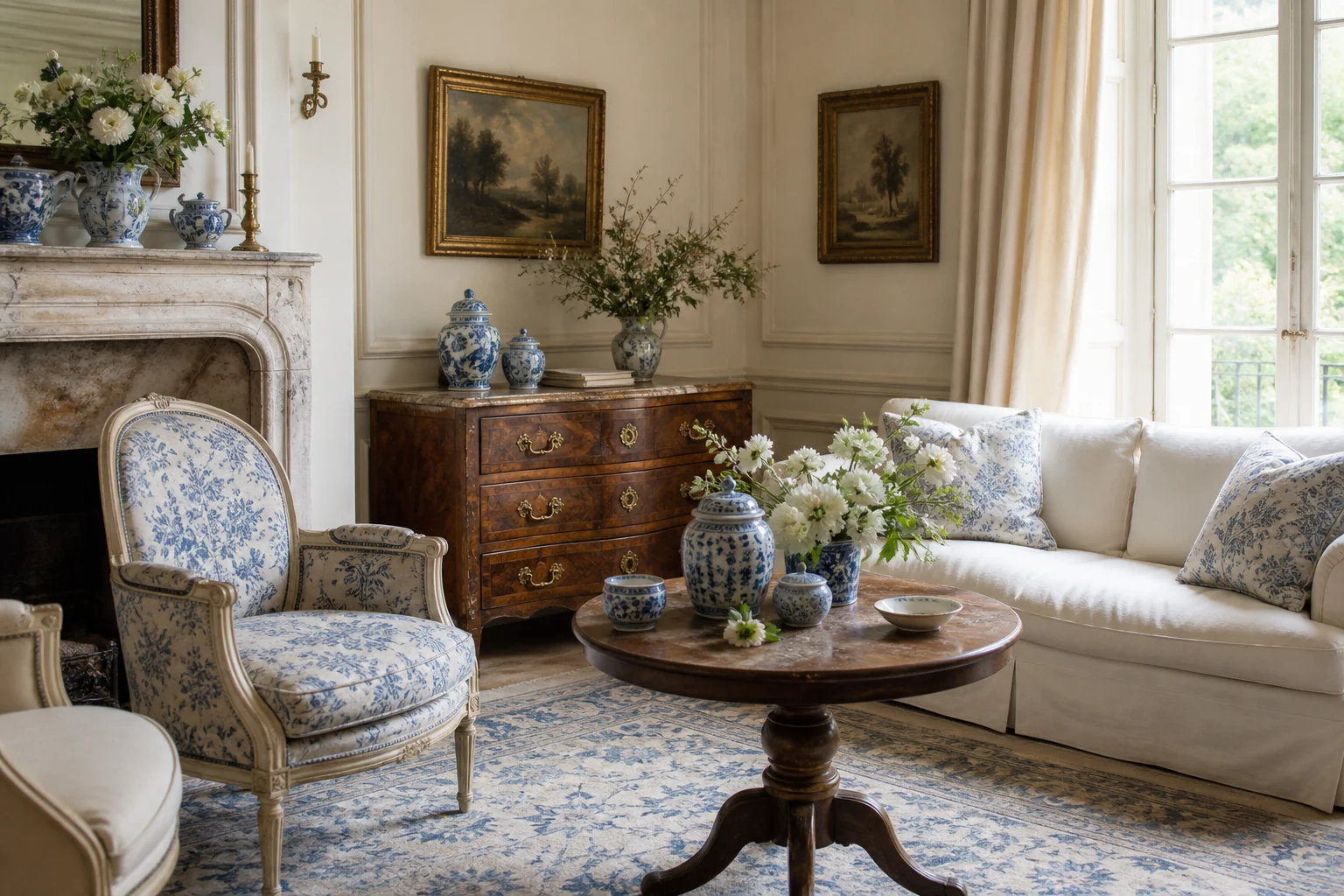
Blue and white has an unusual gift: it can make a room feel fresh and familiar at the same time. In European interiors, the pairing rarely reads as a strict colour scheme. It appears gradually — on a painted jar, a faded floral chair, a striped cushion, or the border of a well-used plate — and becomes part of the room's history.
The most beautiful blue-and-white rooms are not entirely blue and white. Warm wood, aged brass, chalky plaster, garden greens, and softly coloured art keep the palette from feeling cold or nautical. The goal is not to match every pattern. It is to repeat one colour through pieces that look as though they were collected over time.
Begin with warmth, not blue
Before choosing a single patterned object, give the room a warm background. Ivory, limestone, parchment, pale putty, and muted cream soften blue and make painted ceramics look luminous. Stark white can push the same pieces toward a sharper coastal look; a warmer neutral makes them feel older and more European.
Wood is equally important. Walnut, oak, fruitwood, and even a small mahogany table give the palette depth. If the room already has warm floors or antique furniture, let those tones remain visible. Blue and white is most convincing when it has something earthy to lean against.
Think of blue as the thread that travels through the room, not the fabric covering every surface.
Choose one patterned piece to lead
A room becomes easier to compose when one larger piece establishes the scale and character of the pattern. That might be a floral chair, a toile curtain, or a blue-and-ivory rug. Let it lead, then choose smaller accents that repeat its colour without copying its exact motif.
A botanical chair works particularly well because it brings blue into the middle of the room and gives an otherwise neutral arrangement a graceful focal point. Surround it with plain linen, warm wood, and one or two quieter patterns.

Vintage-Inspired Blue & White Floral Accent Chair
The classic silhouette and soft botanical upholstery give a living room one confident blue-and-white statement without requiring a matching suite.
View on AmazonAffiliate link · I may earn a commission.Ground the palette with a faded rug
A traditional rug connects blue pattern to the architecture of a room. Look for a design with ivory showing through rather than a dense field of saturated navy. A faded botanical or medallion pattern feels gentler beside old wood and is forgiving enough to live with florals, stripes, and checks.
The rug does not need to match the chair exactly. In fact, a slight variation in blue — cornflower beside indigo, or dusty blue beside slate — keeps the room from looking assembled all at once.

Blue Floral Area Rug
Soft blue and ivory give the floor pattern and presence while the botanical design remains quiet enough to support other collected pieces.
View on AmazonAffiliate link · I may earn a commission.Use painted ceramics as punctuation
Blue-and-white ceramics are the easiest way to carry the palette from room to room. One generous chinoiserie vase on an old chest can be enough. Fill it with garden flowers or leafy branches and let the arrangement bring softness and height to the room.
Leave space around the vase so its painted detail can be seen. It will look more important beside a stack of books, a brass candlestick, or a bowl of fruit than it does in a crowded row of similar vessels.

Blue & White Floral Chinoiserie Vase
The open silhouette suits loose garden flowers and gives a console or dining table one graceful statement without repeating the familiar lidded-jar look.
View on AmazonAffiliate link · I may earn a commission.The Weekly Edit
One email a week with new finds, seasonal styling, and the pieces I would actually put in my own home. No spam, unsubscribe anytime.
Bring blue up to eye level with lighting
A ceramic lamp is useful because it carries both colour and function. It can connect a patterned rug to artwork above a table, or repeat the blue of a chair across the room. Choose a shade in warm white, linen, or softly pleated fabric so the light remains gentle.
If the lamp base is highly patterned, keep the surrounding surface simple. A small tray, one book, and fresh flowers are enough. The pattern should read clearly rather than compete with a dozen decorative objects.

Blue & White Chinoiserie Table Lamp
The rounded porcelain base, delicate bird-and-floral motif, and softly pleated shade add pattern and gentle evening light without feeling heavy.
View on AmazonAffiliate link · I may earn a commission.Layer textiles without making a matching set
The quickest way to make blue and white feel collected is to vary the patterns. Pair a botanical with a narrow stripe, a small check, or plain washed linen. Change the scale as well: one larger floral, one smaller motif, and plenty of solid fabric give the eye a place to rest.
Two patterned pillows on an ivory sofa can transform a room. If the upholstery is already floral, reverse the balance and choose quieter cushions with blue piping or a restrained stripe.

Blue Floral French Country Pillows
Botanical motifs add an easy layer of colour to neutral seating and can be moved from a sofa to a bed or reading chair as the room changes.
View on AmazonAffiliate link · I may earn a commission.Let plates become part of the room
European homes often blur the line between useful and decorative. A group of blue-and-white plates can turn an overlooked wall into a collected focal point, while everyday bowls and dishes remain beautiful enough to leave on open shelves.
For a plate wall, vary the sizes and motifs rather than buying six identical pieces. Arrange them loosely around one larger plate, keep enough warm wall colour visible between each shape, and echo the blue once nearby with flowers or a small ceramic vessel.

Vintage Blue & White Ceramic Plates
A varied collection of traditional motifs creates the gathered-over-time feeling of a European kitchen or dining room and leaves room to build an arrangement that feels personal.
View on AmazonAffiliate link · I may earn a commission.Adjust the palette to your European style
For French Country
Choose faded florals, toile, warm walnut, brass, limestone, and blue-painted ceramics. Let the blue feel softened by cream and age rather than crisp and graphic.
For French Coastal
Use washed blue, ivory linen, pale oak, rattan, and fewer ceramics. Stripes and airy solids can replace some of the florals, keeping the room light without becoming nautical.
For an English cottage
Mix blue florals with gingham, old landscape paintings, darker wood, gathered shades, and a little garden green. More pattern is welcome here, provided the scales vary and the colours remain gentle.
What keeps blue and white from feeling cold
- Warm ivory instead of bright optic white
- Visible wood grain and at least one aged finish
- Several shades of blue rather than one exact match
- Solid linen between patterned pieces
- Brass, gilt, or warm candlelight
- Fresh greenery, flowers, or a softly coloured landscape
What I would leave out
- A blue pattern on every upholstered surface
- Matching jars arranged in a rigid row
- Nautical rope, anchors, or beach signs unless the home is truly coastal
- Cool gray furniture that drains the warmth from the palette
- Too many tiny patterns competing at the same scale
A simple way to begin
Start with the piece that has the most presence: a rug, a chair, or a curtain. Add one ceramic object at a different height, then repeat blue once in a soft textile. Stop there for a few days. Blue and white gains elegance from repetition, but it gains soul from restraint.
For more ways to build a layered room, continue with How to Style a European Living Room, explore the complete French Country decorating guide, or see how blue becomes lighter and airier in the French Coastal style guide.